





Business connectivity has become a core part of how modern organizations operate. Employees depend on cloud platforms, customers expect responsive digital experiences, and businesses increasingly connect devices, applications, sensors, and intelligent systems. Against this backdrop, Wi Fi 7 is gaining attention as a major development in wireless networking.
Unlike earlier wireless upgrades that mainly focused on improving speed, the latest generation is designed to support higher capacity, reduced latency, and more reliable connections. As a result, businesses can explore new ways to improve collaboration, productivity, automation, and customer experiences.
Understanding the New Wireless Generation
Wi Fi 7 is the latest generation of Wi Fi technology and introduces several improvements designed for increasingly demanding connected environments. It supports wider channels, advanced modulation, and Multi Link Operation, allowing compatible devices to communicate across multiple frequency bands.
Consequently, organizations can potentially achieve faster and more stable wireless performance when the appropriate devices and network infrastructure are available. However, real world performance depends on factors such as network design, spectrum conditions, device compatibility, and deployment quality.
For business leaders, the importance of this technology extends beyond faster internet access. It can become part of a wider strategy for building flexible and digitally connected workplaces.
Why Faster Connectivity Matters to Businesses
Modern companies are no longer dependent on a small number of desktop computers connected to a local network. Employees may use laptops, smartphones, video conferencing systems, cloud applications, smart displays, and connected workplace equipment at the same time.
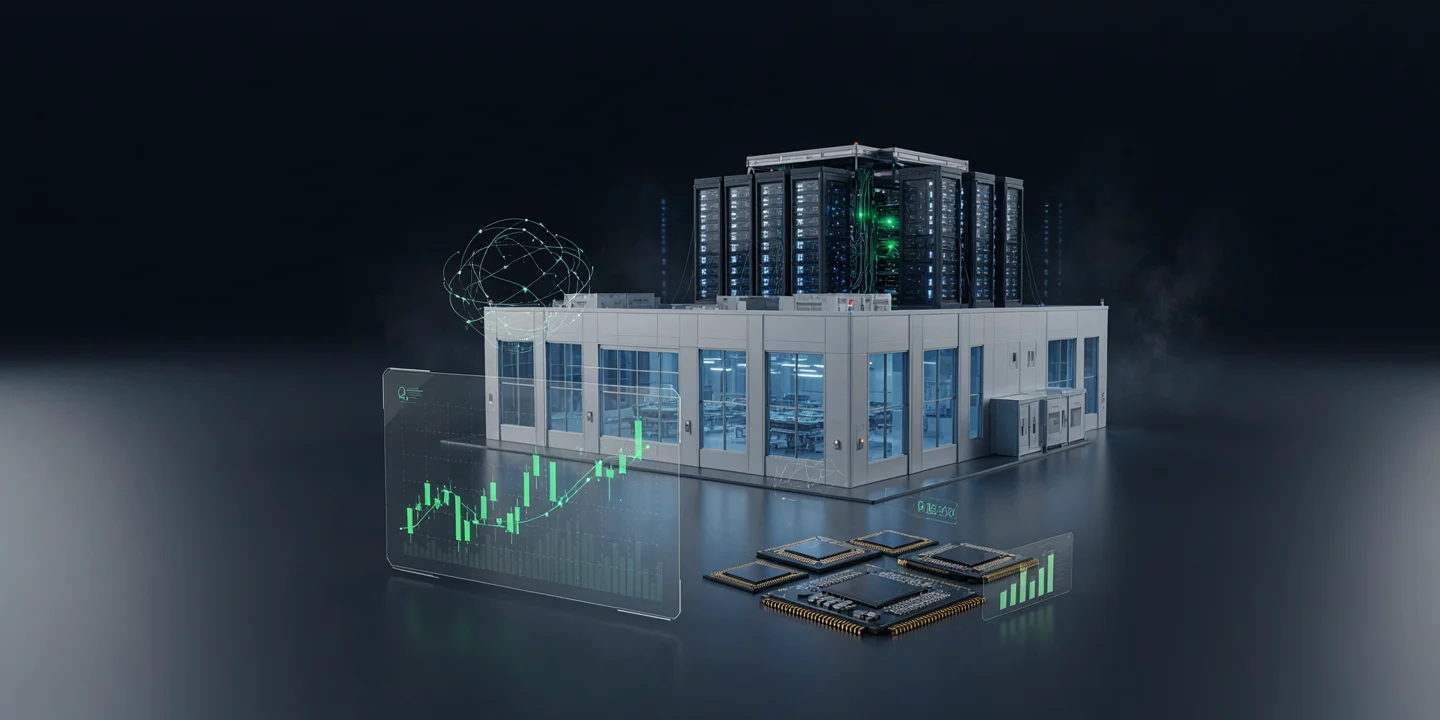
Meanwhile, businesses are increasingly adopting artificial intelligence, automation, Internet of Things devices, and edge computing. These technologies generate continuous data traffic and often require responsive network connections.
Therefore, stronger wireless infrastructure can help organizations handle growing connectivity requirements while supporting a smoother digital experience. Moreover, reliable networks can reduce interruptions that affect employee productivity and customer interactions.
Supporting Hybrid and Flexible Work
The workplace has changed significantly as organizations embrace flexible working arrangements. Employees may move between offices, meeting rooms, shared workspaces, and remote locations while accessing the same business applications.
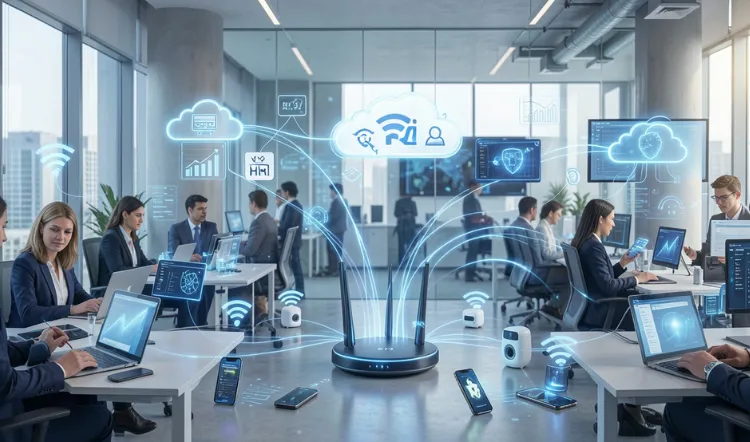
Wi Fi 7 can help organizations build more capable workplace networks that support high device density and bandwidth intensive applications. As a result, employees can collaborate through video meetings, cloud platforms, and real time applications with greater network capacity.
From an HR perspective, this development also connects with broader HR trends and insights surrounding workplace flexibility and employee experience. When digital tools work reliably, employees can spend less time dealing with connectivity problems and more time focusing on meaningful work.
Creating Better Customer Experiences
Connectivity also plays an important role in customer facing environments. Retail stores, hospitality businesses, financial institutions, healthcare organizations, and other service providers increasingly use wireless technologies to connect employees, customers, sensors, and digital systems.
For example, a connected retail environment can use wireless devices to support inventory management, digital signage, mobile checkout, and personalized customer experiences. Similarly, hospitality businesses can connect operational systems while offering reliable internet access to guests.
In this way, better connectivity can complement marketing trends analysis by enabling businesses to create more responsive and digitally connected customer journeys.
Enabling AI and Business Automation
Artificial intelligence is becoming deeply integrated into everyday business operations. From intelligent assistants to predictive analytics and automated workflows, many AI applications depend on the rapid movement of information between devices, cloud platforms, and edge systems.
Additionally, robotics, augmented reality, industrial automation, and smart building technologies can place demanding requirements on wireless networks. Lower latency and higher capacity can make these environments more practical to operate.
Consequently, organizations can view next generation wireless technology as an enabler for innovation rather than simply an infrastructure upgrade.
Business Benefits Beyond the IT Department
The impact of advanced connectivity reaches almost every department. Finance teams increasingly rely on cloud based financial applications, analytics platforms, and real time collaboration, making reliable connectivity relevant to finance industry updates.
Sales teams similarly depend on customer relationship management platforms, virtual meetings, mobile applications, and digital sales tools. Therefore, stronger connectivity can support sales strategies and research by keeping teams connected to critical information.
Technology leaders can also use network performance data to identify bottlenecks and improve infrastructure planning. In contrast, businesses that postpone network modernization may find it harder to support increasingly connected operations.
Security Must Remain a Priority
Greater connectivity also creates greater responsibility. Businesses need to consider security alongside performance when upgrading wireless infrastructure.
Strong authentication, access controls, network segmentation, device management, monitoring, and timely security updates remain essential. Furthermore, organizations should evaluate every connected endpoint because an expanding wireless environment can increase the overall attack surface.
Technology insights can help decision makers understand how wireless modernization fits within their wider cybersecurity and infrastructure strategy. Therefore, performance improvements should always be balanced with appropriate security controls.
How Businesses Can Prepare
Organizations do not necessarily need to replace every existing device at once. Instead, they can begin by identifying areas where improved wireless performance could deliver measurable business value.
High density offices, collaboration spaces, manufacturing facilities, research environments, retail locations, and customer service areas may benefit from early adoption. Meanwhile, existing wireless infrastructure can continue supporting devices that are not yet compatible with the newer standard.
Additionally, businesses should evaluate access points, network switches, security platforms, endpoint devices, and management tools as part of the overall upgrade strategy. A coordinated approach can produce better results than treating wireless modernization as a standalone project.
What the Future Holds for Business Connectivity
The evolution of wireless networking reflects a larger transformation taking place across the business world. Organizations are becoming more dependent on cloud services, AI, automation, connected devices, and real time data.
As a result, network infrastructure will increasingly influence how effectively businesses innovate and respond to changing customer expectations. Wi Fi 7 can play an important role in this transition by providing the capacity and responsiveness required by emerging digital workloads.
Moreover, businesses following IT industry news can see how connectivity is becoming closely linked with broader technology investment decisions. The organizations that understand this connection can make more informed infrastructure choices as digital operations continue to expand.
Practical Insights for Business Leaders
The most effective approach is to connect wireless investment with measurable business objectives. Instead of adopting new technology simply because it is available, organizations should identify specific challenges such as network congestion, poor application performance, limited device capacity, or demanding new workloads.
Businesses should also assess their current infrastructure, compatibility requirements, security capabilities, and future technology plans. Consequently, investments can be prioritized around areas where improved connectivity will have the strongest operational impact.
The future of business networking will not be defined by speed alone. Reliability, security, flexibility, intelligent management, and the ability to support emerging technologies will become equally important as organizations continue their digital transformation journey.
Stay Ahead With Business Insights
Reach out to BusinessInfoPro for deeper insights that can help your organization make smarter technology and business decisions.