







Financial technology company Plaid is expanding beyond bank account connectivity. It is investing in credit scoring and financial data analytics to support its next phase of growth. Its tools help lenders assess borrowers using cash flow information alongside traditional credit records.
Plaid introduced its LendScore credit risk product in October 2025. Since then, the company has expanded its lending technology. In October 2026, Plaid announced LendScore 2 and additional tools for lenders. These developments reflect a broader fintech shift toward alternative financial data.
Traditional lenders rely heavily on credit bureau records and repayment history. However, these records may not show a borrower’s current income or spending habits. Cash flow insights can help lenders understand an applicant’s financial position more clearly.
LendScore Uses Real Time Financial Data
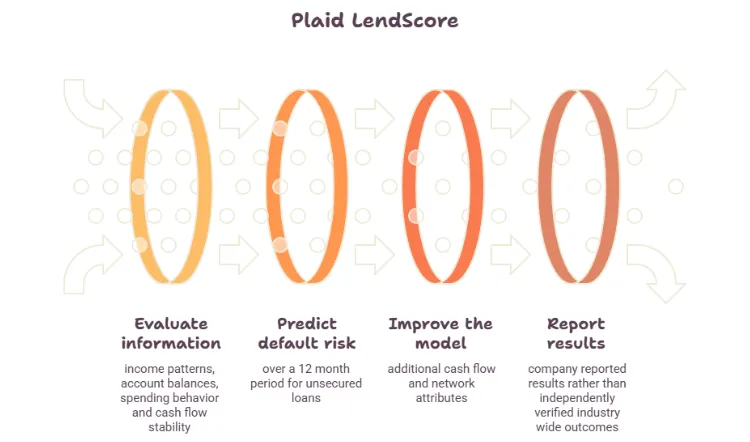
Plaid’s LendScore analyzes income patterns, account balances, spending behavior and cash flow stability. With consumer permission, this information gives lenders a more current view of an applicant’s finances.
Plaid reported a 25 percent improvement in predictive performance for its initial LendScore model. Its October 2025 announcement compared the model with traditional credit data alone. The model used nearly one billion transactions. It aimed to predict default risk over 12 months for unsecured loans.
In May 2026, Plaid announced further improvements to LendScore. These included additional cash flow and network attributes. The updates aimed to improve underwriting performance and explainability.
These results come from Plaid’s own reporting. They do not represent independently verified industry wide outcomes. Nevertheless, they highlight the growing role of data analytics in lending.
LendScore 2 and New Tools Target Lenders
Plaid’s October 2026 product developments build on its original credit scoring offering. LendScore 2 introduces a broader family of risk models. Meanwhile, Instant Link aims to simplify access to consumer permitted financial insights.
Eligible borrowers may not need to reconnect their bank accounts for every application. Plaid says the new experience can deliver insights in under two seconds. This could help lenders speed up applications and reduce friction.
Furthermore, Plaid is developing specialized scoring approaches for automotive, home and short term lending. Each category carries different risks. Tailored models could help lenders make decisions that better reflect individual borrowers and loan requirements.
Alternative Credit Data Could Expand Financial Inclusion
Cash flow based credit scoring could help people with limited credit histories. Younger consumers, independent workers and people with irregular earnings may struggle to demonstrate creditworthiness through traditional records.
Bank account activity offers additional evidence of financial stability. Recurring income, regular bill payments and account balances can help lenders assess repayment capacity. Consequently, some applicants may receive a more complete evaluation.
Plaid has also partnered with FICO on the next generation of UltraFICO Score. The companies announced the initiative in November 2025 and made it generally available in May 2026. The solution combines traditional FICO scoring with consumer permitted cash flow data powered by Plaid.
This approach adds financial information to an established credit scoring framework. However, alternative data does not automatically produce fairer outcomes. Lenders must consider privacy, consumer consent, data quality and potential bias. They must also follow applicable credit reporting regulations.
What the Expansion Means for the Fintech Industry
Plaid’s investment in credit scoring shows how fintech companies are expanding beyond payment connections and financial data access. By offering lending tools, providers can become more closely integrated into financial institutions’ operations. They may also develop new recurring revenue opportunities.
For banks and digital lenders, improved risk models could support faster underwriting. They could also help identify borrowers who qualify for credit. Moreover, financial data infrastructure increasingly supports artificial intelligence, fraud prevention and automated financial services.
However, these opportunities bring responsibilities. Financial institutions must explain automated decisions and protect sensitive information. They should also tell consumers how their financial data supports lending assessments.
What Businesses Should Know
Financial services businesses should monitor the growth of alternative credit scoring. Plaid’s expanding product range highlights the value of combining traditional credit records with current, permissioned financial information.
However, organizations should test predictive performance against their own borrower populations. They should not rely solely on vendor reported results. Businesses must also assess integration costs, regulatory requirements, model transparency and customer consent before adopting new technology.
As competition intensifies, responsible innovation will remain essential. Plaid’s expansion signals that real time financial insights could play an increasingly important role in fintech growth.
Stay informed with the latest Finance industry updates, Technology insights and IT industry news at BusinessInfoPro.com.
Explore our latest business reporting and industry insights to stay ahead of emerging trends.