




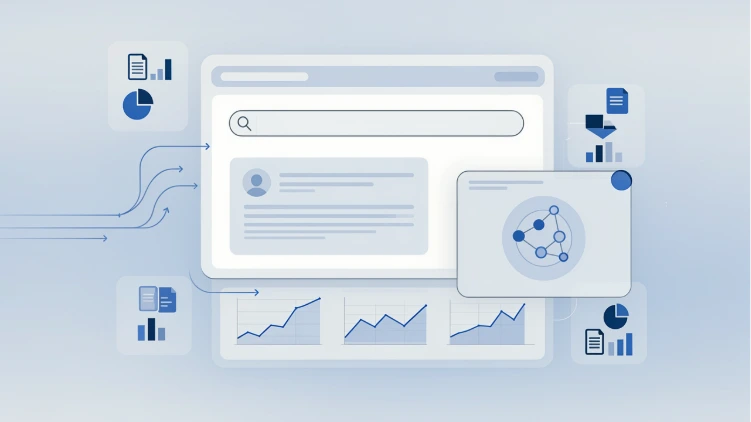
Search engines are changing how people discover information online, creating new challenges for businesses that depend on organic website traffic. Zero click searches occur when users find answers directly on search results pages without visiting another website. Search summaries, featured snippets, knowledge panels and other search features increasingly allow users to access information without clicking through to the original source.
For marketers, this shift raises an important question about the future of search engine optimization. As search platforms provide more information directly to users, businesses must rethink how they measure visibility, build authority and attract potential customers. Consequently, content marketing strategies are increasingly focused on earning trust and influencing decisions rather than relying exclusively on website visits.
How Search Engines Are Changing User Behavior
Google has introduced several features designed to help users find information more quickly, including AI Overviews, featured snippets and knowledge panels. AI Overviews use artificial intelligence to summarize information from multiple sources and may include links to supporting websites.
Meanwhile, traditional search results continue to compete with these features for user attention. Informational searches, such as questions about definitions, basic facts and general explanations, are particularly suited to direct answers.
However, zero click searches do not mean that every search produces fewer clicks. Users researching complex services, comparing products or preparing to make purchases may still need detailed information from individual websites. The impact therefore varies according to search intent, industry, query type and the quality of the information presented on the results page.
What the Latest Research Reveals
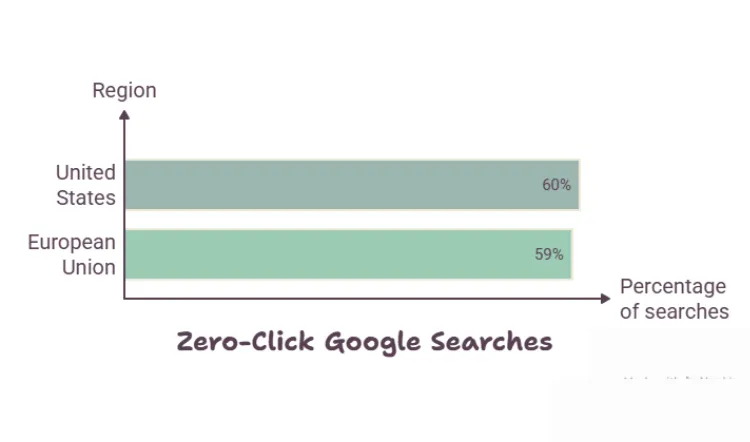
Research from SparkToro and Datos published in 2024 examined millions of desktop and mobile Google searches in the United States and European Union. The study found that nearly 60 percent of Google searches in the United States and approximately 59 percent in the European Union ended without a click to the open web.
These findings demonstrate that zero click behavior existed well before the widespread introduction of AI generated search summaries. Nevertheless, the growth of AI powered search experiences has intensified discussions about how search engines distribute attention and traffic.
Furthermore, zero click rates should not be interpreted as a universal measurement for every website or industry. Individual businesses need to evaluate their own search performance using relevant analytics, search queries and landing page data.
The Impact of AI Search on Content Marketing
AI powered search is adding another layer to the relationship between content creators and search platforms. Businesses must now consider whether their content can help answer user questions, appear in relevant search features and establish credibility across digital channels.
Although appearing in an AI generated summary may increase brand exposure, visibility does not automatically translate into website visits or sales. Additionally, inclusion in these summaries can vary by query and search experience, making consistent placement difficult to guarantee.
This development is particularly relevant to marketing trends analysis and technology insights. Content teams must understand how users search, which questions influence buying decisions and where original expertise can provide value beyond a short summary.
Why Original and Trustworthy Content Matters
As search engines become better at summarizing widely available information, businesses have stronger reasons to publish material that offers distinctive value. Original research, first hand experience, expert commentary, industry analysis and practical case studies can help differentiate a website from competing sources.
Google’s published guidance on creating helpful, reliable, people first content emphasizes usefulness, originality and demonstrated experience where appropriate. The guidance does not guarantee rankings, but it provides a useful foundation for sustainable content strategies.
Moreover, businesses should avoid producing large volumes of repetitive pages simply to target search queries. Instead, they should answer meaningful customer questions accurately and provide evidence that supports important claims.
For companies operating across finance industry updates, HR trends and insights, sales strategies and research, and IT industry news, credible sourcing is especially important. Readers need information they can understand, verify and use when making business decisions.
How Businesses Should Measure Success
Traditional SEO reporting often emphasizes organic clicks, sessions and keyword rankings. However, these measurements alone may not capture the full impact of search visibility in an environment shaped by direct answers and AI summaries.
Businesses should evaluate several indicators together, including branded search demand, qualified website traffic, lead generation, conversion rates and engagement with high intent pages. Search Console impressions and click through rates can also help identify queries that generate visibility without comparable traffic.
Additionally, marketers should distinguish between informational content and pages designed to generate business outcomes. An educational article may introduce a brand to potential customers, while a detailed service page may help convert users who are already considering a purchase.
Consequently, reporting should connect content performance to business objectives rather than treating every website visit as equally valuable.
What Businesses Should Know
Businesses should adapt their content strategies to serve users both on search results pages and on their own websites. Clear answers, descriptive headings, accurate facts and well organized content can improve usability while helping search systems understand a page.
Furthermore, companies should strengthen their presence beyond traditional search through email newsletters, professional communities, social media and direct audience relationships. These channels can reduce dependence on a single source of traffic.
The future of content marketing will likely involve a combination of search visibility, original expertise, brand recognition and measurable business results. Zero click searches make this transition more important, but they do not eliminate the value of high quality websites.
Businesses that consistently provide useful information and build trusted relationships will be better positioned to respond as search behavior continues to evolve.
Stay informed about SEO developments, digital transformation and emerging marketing strategies with BusinessInfoPro.com.
Visit BusinessInfoPro.com for business insights, technology news and practical industry analysis.