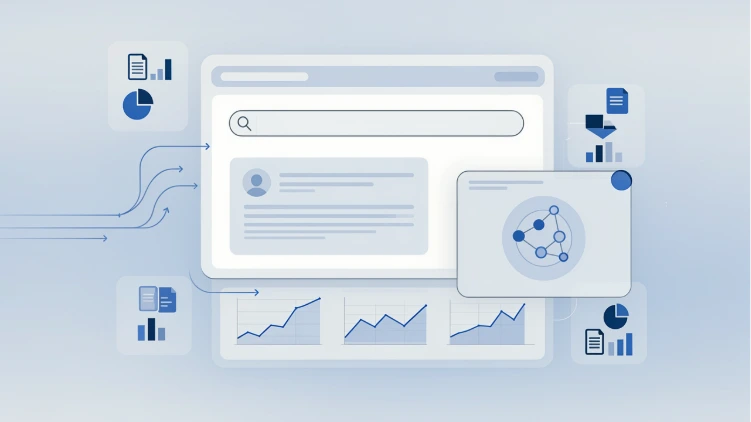






Artificial intelligence has quickly become part of everyday marketing. From campaign creation and data analysis to customer targeting and forecasting, marketing teams are using AI across a growing range of activities. However, new research from Alexander Group reveals an important gap between adoption and measurable business results. Only 41% of marketers surveyed said they can prove the return generated by their AI investments.
The finding comes from Alexander Group’s 2026 Revenue Ready Marketing Organization Research, which examined more than 300 companies across 11 industries. Although 96% of marketers are using AI, only 31% have established proper governance around these initiatives.
AI Adoption Is Rising Faster Than Measurement
The rapid adoption of artificial intelligence is not surprising. Marketing departments are under increasing pressure to produce more personalized campaigns, understand customers faster, and operate efficiently despite rising acquisition costs.
Nevertheless, widespread adoption does not automatically translate into measurable commercial value. Marketers may be using AI frequently while still struggling to connect those activities to pipeline, revenue, customer retention, or productivity improvements.
As a result, businesses are beginning to ask more meaningful questions about their technology investments. Instead of simply asking whether employees are using AI, marketing leaders increasingly need to understand where the technology is producing measurable business outcomes.
The Growing Gap Between AI Use and Business Value
Alexander Group’s research highlights a broader challenge facing modern marketing organizations. Many teams are using AI for campaign design and data interpretation, yet fewer organizations are applying it to areas that directly influence revenue performance.
For example, AI can help identify promising prospects, improve customer experiences, highlight valuable customer groups, and support forecasting. These applications can potentially have a stronger commercial impact than using AI only to produce marketing materials.
Furthermore, the research found that 63% of top performing organizations apply AI across five or more use cases while demonstrating contribution through productivity gains. This suggests that successful adoption is becoming less about experimentation and more about integrating AI into important business processes.
Marketing Teams Face Increasing Revenue Pressure
The timing of the research is particularly significant because customer acquisition has become more expensive. According to the findings, customer acquisition costs have increased by at least 60% since 2022. Buyers are also completing approximately 70% of their evaluations across 10 channels before engaging directly with sellers.
Consequently, marketing teams need a clearer understanding of which activities influence customer decisions. This makes measurement, attribution, and data quality increasingly important.
At the same time, sales and marketing teams need to work from a shared understanding of pipeline performance. Alexander Group found that only 26% of organizations generate more than 40% of their sales pipeline from marketing. In addition, although 56% use advanced attribution models, only 30% trust the accuracy of the results across marketing and sales.
Why AI Governance Matters
As AI becomes more deeply embedded in marketing operations, governance is becoming equally important. Without clear oversight, organizations can struggle to understand how tools are being used, whether information is reliable, and whether AI applications are aligned with business objectives.
Only 31% of marketers in the research reported having established proper AI governance. Therefore, organizations have an opportunity to improve not only their technology strategies but also the processes surrounding them.
Strong governance can help businesses establish clearer responsibilities, improve data practices, and create consistent methods for evaluating AI initiatives. More importantly, it can help marketing leaders distinguish useful applications from technology adopted simply because it is popular.
AI Is Moving Toward Revenue Focused Marketing
The research points toward a broader transformation in marketing. AI is no longer simply a productivity tool. Increasingly, businesses are looking at how it can support customer intelligence, demand generation, forecasting, and revenue growth.
This shift also connects with wider marketing trends analysis. Marketing leaders are being asked to demonstrate how campaigns contribute to commercial outcomes rather than focusing only on impressions, clicks, or lead volumes.
Similarly, sales strategies and research are increasingly connected with marketing data. When both functions understand customer behavior and pipeline movement through reliable information, organizations can make better decisions about where to invest resources.
Technology Insights for Marketing Leaders
The latest findings offer an important lesson for organizations investing in artificial intelligence. Adoption should not be treated as the final goal. Instead, businesses should establish clear objectives before introducing AI into a marketing process.
First, leaders need to identify the business problem they want the technology to address. Next, they should establish measurable indicators that can demonstrate whether the solution is working. Finally, they should regularly compare expected results with actual outcomes.
Moreover, organizations should look beyond short term productivity gains. Saving employees time is valuable, but the larger opportunity may come from improving customer targeting, increasing conversion rates, strengthening retention, or making more accurate forecasts.
What This Means for the Future of Marketing
The gap between AI adoption and measurable value is likely to remain an important issue as organizations expand their technology investments. Marketing teams cannot simply add more tools and expect better results.
Instead, successful organizations will increasingly connect technology decisions with business objectives. They will also need stronger collaboration between marketing, sales, finance, and technology teams.
Meanwhile, professionals following IT industry news, HR trends and insights, and finance industry updates will see similar pressure for measurable outcomes across business functions. Companies are becoming more focused on understanding whether technology investments improve productivity, efficiency, customer experience, or revenue.
Actionable Insights for Businesses
The most important lesson from the research is that using AI and proving its business value are two different challenges. Marketing leaders should therefore create a clear measurement framework before expanding their AI programs.
Teams can begin by connecting individual AI initiatives with specific business outcomes. They can then monitor performance consistently, review attribution quality, and involve sales and finance stakeholders when evaluating commercial impact.
Furthermore, organizations should prioritize fewer high value applications instead of adopting large numbers of disconnected tools. This approach can make governance easier while giving leadership a clearer view of which investments are producing meaningful results.
As AI continues to reshape marketing, the organizations that combine adoption with accountability will be better positioned to turn technology investments into sustainable business growth.
Stay informed with BusinessInfoPro and discover insights that can help your organization make smarter technology and growth decisions.
Source : demandgenreport.com