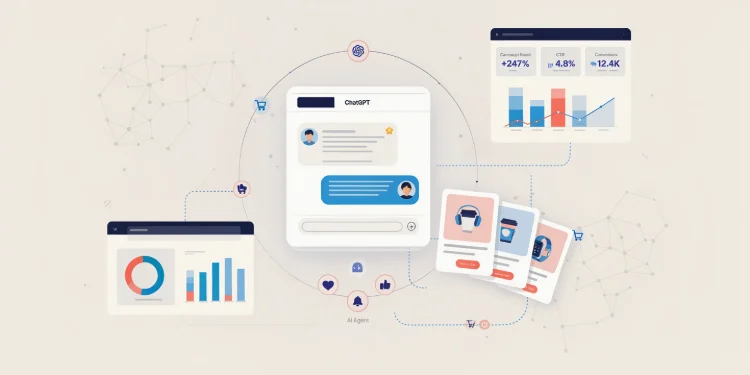






In 2026, SaaS companies are collecting information from product usage, customer interactions, marketing campaigns, sales pipelines, support conversations, and business operations. Data analytics helps turn these large volumes of information into actionable insights that can improve decision-making and accelerate growth.
For SaaS businesses, the value of Data is no longer limited to reporting what happened. Modern analytics can help organizations understand why something happened, predict what may happen next, and identify opportunities for action.
Why Data Matters for SaaS Growth
SaaS businesses operate across multiple digital touchpoints. Every customer interaction can generate valuable information, from the first website visit to product adoption, subscription renewal, and customer support.
When organizations effectively analyze this information, they can develop a clearer understanding of customer behavior.
For example, product teams can identify which features customers use most frequently. Marketing teams can determine which campaigns generate high-quality leads. Sales teams can identify accounts showing strong buying signals, while customer success teams can recognize customers who may be at risk of leaving.
This makes Data an important foundation for growth across the entire SaaS organization.
Data-Driven Product Development
SaaS companies need to continuously improve their products to remain competitive.
Analytics can reveal how customers actually use a product rather than relying entirely on assumptions or surveys. Product teams can analyze feature adoption, user journeys, engagement levels, and usage patterns to identify areas for improvement.
If a feature receives little engagement, the company can investigate whether it is difficult to discover, confusing to use, or simply not valuable to customers.
This approach allows SaaS businesses to prioritize product development based on measurable customer behavior.
Personalizing the SaaS Customer Experience
Customer expectations are becoming increasingly personalized.
Data analytics allows SaaS companies to create more relevant experiences based on customer characteristics and behavior. Businesses can segment customers according to factors such as industry, company size, product usage, engagement, and purchasing behavior.
These insights can support personalized onboarding, targeted product recommendations, relevant communications, and customer success strategies.
The result can be a more relevant customer experience throughout the SaaS lifecycle.
Data and Customer Retention
Customer acquisition is only one part of SaaS growth. Retention is equally important because recurring revenue depends on customers continuing to use and pay for the product.
Analytics can help companies identify patterns associated with customer churn.
Declining product usage, reduced engagement, fewer logins, unresolved support issues, or changes in account activity may indicate that a customer is becoming less engaged.
By identifying these signals early, customer success teams can take action before a customer decides to leave.
Predictive Analytics for SaaS
The role of analytics is expanding from historical reporting toward prediction.
Predictive analytics uses historical and current Data to identify potential future outcomes. SaaS companies can use these insights for areas such as demand forecasting, customer churn prediction, sales forecasting, and revenue planning.
For example, a SaaS company may analyze historical customer behavior to estimate which accounts are most likely to renew or expand.
Predictive insights can help organizations move from reactive decision-making toward more proactive strategies.
AI Is Expanding the Value of Data
Artificial intelligence is increasing the capabilities of modern analytics.
AI systems can process large datasets, identify patterns, summarize insights, and support more advanced forecasting. This allows teams to analyze information faster without relying entirely on manual reporting.
Generative AI is also making analytics more accessible. Employees may increasingly interact with business information using natural-language questions rather than building complex reports manually.
For SaaS companies, this can make Data insights available to a broader range of employees across departments.
Data-Driven Marketing and Demand Generation
Marketing teams generate enormous amounts of information across websites, advertising platforms, email campaigns, social media, and content programs.
Analytics helps marketers understand which channels and campaigns are contributing to pipeline and revenue.
Instead of measuring success only through traffic or lead volume, SaaS companies can connect marketing activity with downstream outcomes such as qualified opportunities, conversions, customer acquisition, and revenue.
This creates a more measurable approach to demand generation.
Improving SaaS Sales Performance
Sales teams can use analytics to identify high-value opportunities and improve forecasting.
By analyzing historical deals, customer profiles, engagement patterns, and pipeline activity, organizations can identify characteristics associated with successful conversions.
Sales leaders can also monitor pipeline health and identify potential bottlenecks.
Better Data visibility can help sales teams focus their efforts on opportunities with stronger potential while giving leadership a clearer view of future revenue.
Operational Efficiency Through Data
Data analytics is not limited to customer-facing teams.
SaaS companies can use analytics to improve internal operations, including infrastructure performance, customer support, employee workflows, financial planning, and resource allocation.
For example, analyzing support tickets can help identify recurring customer problems. Infrastructure analytics can reveal unusual usage patterns or capacity requirements.
These insights can help businesses reduce inefficiencies and allocate resources more effectively.
Data Quality and Governance Become Essential
The growing importance of Data also creates new challenges.
Analytics are only as reliable as the information being analyzed. Inconsistent, duplicated, outdated, or inaccurate data can lead to poor business decisions.
SaaS organizations therefore need strong data governance practices. This includes establishing ownership, improving data quality, controlling access, documenting important data sources, and protecting sensitive information.
Privacy and security should also remain central to any data strategy.
Breaking Down Data Silos
One of the biggest obstacles to effective analytics is fragmented information.
Marketing may have one view of a customer while sales, support, product, and finance teams maintain different records.
Connecting these systems can create a more complete view of the customer and business.
A unified data environment allows teams to collaborate using consistent information and reduces the risk of making decisions based on incomplete datasets.
Building a Data-Driven Culture
Technology alone cannot create a data-driven organization.
SaaS leaders need to encourage employees to use evidence when making decisions while still allowing room for creativity and professional judgment.
Employees should understand where reliable information comes from and how to interpret analytics correctly.
Organizations can also improve data literacy by providing training and making dashboards and insights accessible to employees who need them.
The Future of Data Analytics in SaaS
The role of Data in SaaS will continue to expand as organizations adopt AI, automation, connected applications, and increasingly sophisticated analytics platforms.
Companies will move beyond simply tracking business performance toward continuously analyzing customer and operational signals.
Real-time analytics, predictive models, AI-assisted decision-making, and automated insights can help SaaS organizations respond more quickly to changes in customer behavior and market conditions.
The companies that can transform information into meaningful action will have an advantage in an increasingly competitive SaaS market.
Conclusion
Data has become one of the most important assets for SaaS companies seeking sustainable growth in 2026.
From product development and personalization to customer retention, marketing, sales, and operational efficiency, analytics provides organizations with a clearer understanding of what is happening across the business.
However, collecting more Data is not enough. SaaS companies need reliable information, strong governance, effective analytics, and a culture that turns insights into action.
As AI continues to expand the capabilities of analytics, Data will play an increasingly central role in how SaaS companies innovate, compete, and grow.
Connect with BusinessInfoPro to discover valuable insights, industry analysis, and innovative perspectives that help your organization stay ahead in a rapidly changing world.