




Monitoring graphics processing units has become increasingly important as businesses deploy artificial intelligence models, machine learning applications and other demanding workloads on Kubernetes. NVIDIA has introduced improvements to its Data Center GPU Manager Exporter that help administrators monitor GPU health, identify resource issues and manage telemetry configurations more effectively.
The latest developments focus on more detailed monitoring, improved Kubernetes integration and additional safeguards for diagnostic endpoints. These changes can help IT teams understand GPU performance while reducing unnecessary exposure and improving operational reliability.
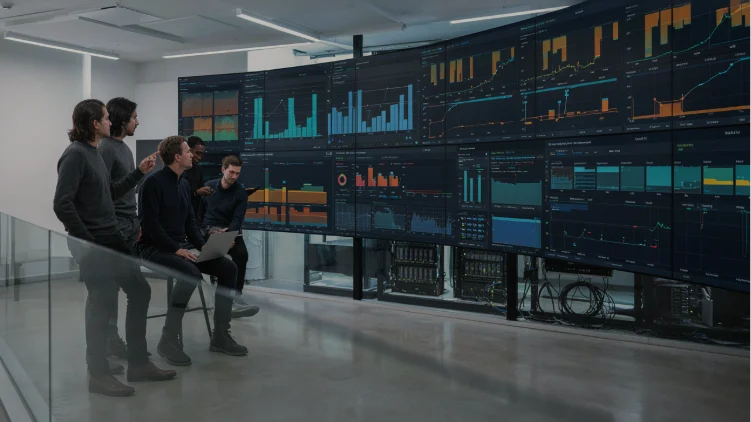
NVIDIA’s DCGM Exporter collects GPU telemetry and presents it in a format that monitoring platforms such as Prometheus can process. Teams can then use Grafana dashboards to examine resource consumption, identify unusual behavior and investigate infrastructure problems.
Recent Updates Improve GPU Monitoring
NVIDIA’s official release notes document several improvements to DCGM Exporter during 2026. The updates include enhanced GPU health reporting, better support for Kubernetes metadata and more flexible configuration options.
The May 2026 release introduced improvements to GPU health metrics, including reporting GPU wide incidents such as errors associated with a GPU becoming unavailable to the system. It also made the exporter’s profiling endpoint opt in, meaning administrators must explicitly enable it when required.
Furthermore, NVIDIA’s July 2026 release added YAML configuration support, improved diagnostic information and expanded support for Kubernetes Dynamic Resource Allocation. The release also introduced additional safeguards around resource reporting and configuration handling.
These changes are particularly relevant to organizations operating shared GPU infrastructure, where monitoring failures can affect multiple applications and teams.
How Safer Metrics Collection Works
Kubernetes GPU metrics help administrators track GPU utilization, memory consumption, power usage and hardware health. However, collecting this information requires access to system resources and, in some configurations, Kubernetes metadata.
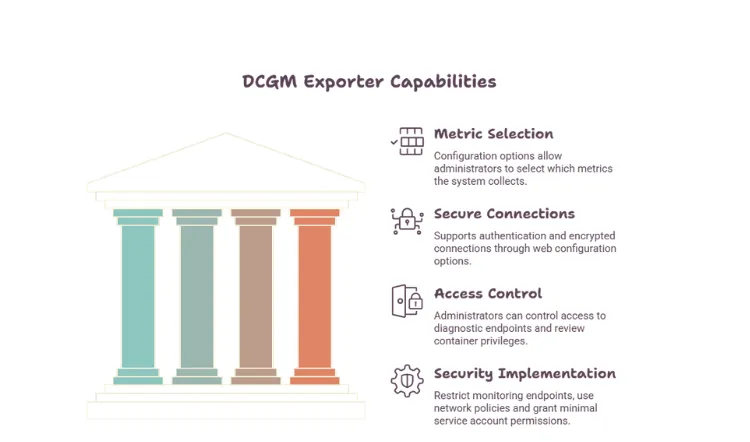
DCGM Exporter provides configuration options that allow administrators to select which metrics the system collects. This helps teams focus on relevant performance indicators rather than exposing unnecessary information.
The exporter also supports authentication and encrypted connections through its web configuration options. Additionally, administrators can control access to diagnostic endpoints and review container privileges before deployment.
Security still depends on implementation. Organizations should restrict monitoring endpoints to trusted systems, use appropriate network policies and grant service accounts only the permissions required for their workloads.
Kubernetes Integration Makes GPU Resources Easier to Understand
GPU monitoring becomes more useful when administrators can connect hardware activity with the applications using those resources. NVIDIA’s exporter integrates with Kubernetes resource information to associate GPU metrics with pods and workloads.
This visibility can help teams investigate why an AI application is running slowly, determine whether GPUs are being underused and identify resource allocation problems.
Recent updates also improve support for Multi Instance GPU environments and Dynamic Resource Allocation. These capabilities matter because organizations increasingly share GPU capacity across workloads rather than assigning an entire device to a single application.
Meanwhile, Prometheus can collect the exported metrics, while Grafana can display utilization trends and operational dashboards. NVIDIA also provides a Helm based deployment approach, helping Kubernetes administrators integrate monitoring into existing infrastructure.
Why These Changes Matter for AI Infrastructure
As businesses expand AI deployments, GPU monitoring is becoming a practical requirement for infrastructure management. Poor visibility can make it harder to identify hardware failures, diagnose performance bottlenecks or determine whether expensive computing resources are being used efficiently.
Improved telemetry can support capacity planning and help technical teams investigate problems before they cause wider service disruptions. Moreover, workload level visibility can help organizations make better decisions about GPU allocation and application performance.
However, monitoring improvements do not automatically guarantee lower costs or stronger security. Results depend on configuration, alert quality, workload design and the team’s ability to respond to the information collected.
For companies running production AI systems, the priority is to combine reliable telemetry with clear operational procedures and appropriate access controls.
What Businesses Should Know
Organizations using Kubernetes for AI workloads should review their existing GPU monitoring configuration and check whether their exporter, driver and DCGM versions are compatible. NVIDIA recommends using tested version combinations because mismatched releases may be unsupported.
IT teams should also review the metrics they collect, restrict access to monitoring endpoints and enable optional diagnostic features only when needed. Testing configuration changes in a staging environment can reduce the risk of disrupting production workloads.
Furthermore, businesses should establish alerts for GPU health issues, unusual utilization and memory pressure. Connecting these signals with application performance data can give teams a clearer understanding of infrastructure problems.
As AI adoption expands, dependable GPU observability will remain an important part of technology insights and IT industry news. Organizations that combine accurate monitoring with sound security practices will be better positioned to manage complex AI infrastructure.
Read more technology insights and IT industry news at BusinessInfoPro.com.
Visit BusinessInfoPro for trusted reporting and practical insights into the developments shaping modern businesses.