




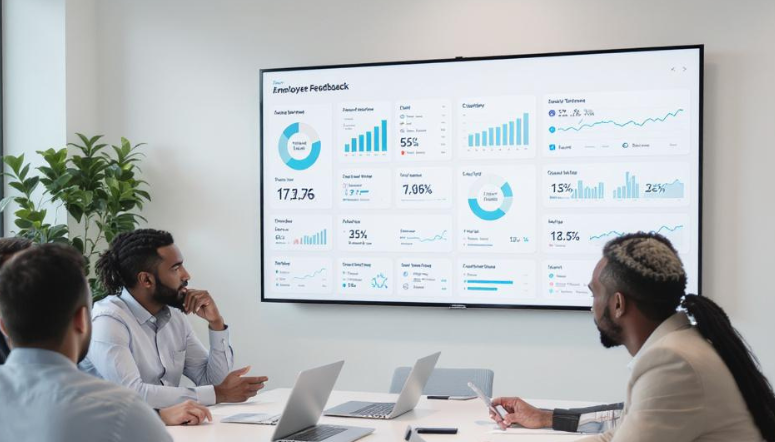
Every successful organization receives employee feedback, including opinions that may be difficult to hear. Instead of viewing criticism as a setback, business leaders should recognize it as an opportunity to strengthen workplace relationships and improve long term performance. A respectful response encourages trust while creating an environment where employees feel comfortable sharing honest perspectives.
Moreover, businesses that actively listen to their workforce often identify operational gaps before they affect productivity, customer satisfaction, or organizational growth. This approach supports continuous improvement and reinforces a positive workplace culture.
Understanding the reason behind negative feedback
Negative feedback usually reflects concerns that employees believe deserve attention. Sometimes those concerns relate to communication, workplace policies, technology, leadership, or career development. Therefore, taking time to understand the context behind each comment is far more valuable than reacting emotionally.
Additionally, managers who ask thoughtful follow up questions demonstrate genuine interest in resolving issues rather than dismissing them. This simple practice often transforms challenging conversations into productive discussions that benefit everyone involved.
Respond with professionalism and empathy
An effective response begins with active listening. Employees appreciate leaders who acknowledge concerns without becoming defensive. Similarly, recognizing the emotions behind feedback helps create a respectful conversation where practical solutions become easier to identify.
Furthermore, transparency plays an important role. If immediate changes are not possible, explaining the reasons honestly helps maintain credibility. Employees are generally more understanding when they receive clear communication about business priorities and available resources.
Turn feedback into meaningful action
Listening alone is not enough. Employees expect to see visible progress after sharing their concerns. Consequently, organizations should evaluate feedback carefully, identify realistic improvements, and communicate the actions being taken.
Technology insights can support this process by helping businesses collect, organize, and analyze employee opinions more efficiently. Modern workplace platforms make it easier to identify recurring themes and measure the impact of improvement initiatives over time.
Meanwhile, HR trends and insights continue to emphasize the importance of ongoing conversations instead of relying only on annual performance reviews. Regular communication helps organizations address concerns before they develop into larger challenges.
Use data to strengthen workplace decisions
Data driven decision making allows organizations to prioritize improvements based on measurable evidence rather than assumptions. For example, employee surveys, engagement scores, and productivity metrics provide valuable information that supports smarter business decisions.
Likewise, IT industry news regularly highlights digital tools that simplify workforce communication and enhance collaboration across remote and hybrid teams. Businesses that embrace these innovations often improve both employee satisfaction and operational efficiency.
In addition, finance industry updates demonstrate how organizations use structured reporting and performance analytics to improve accountability. Similar approaches can strengthen workplace communication by ensuring feedback is evaluated fairly and consistently.
Encourage continuous communication
Workplace communication should never end after one conversation. Instead, organizations should create regular opportunities for employees to share ideas, concerns, and suggestions throughout the year. As a result, leaders gain a better understanding of workforce expectations while employees feel more connected to organizational goals.
Similarly, sales strategies and research show that consistent coaching and ongoing dialogue improve performance more effectively than infrequent evaluations. Businesses can apply the same principle to employee engagement by encouraging open discussions at every level.
Marketing trends analysis also demonstrates the value of listening carefully to audience expectations. In much the same way, organizations that understand employee expectations are better prepared to build stronger workplace cultures.
Building trust through consistent leadership
Trust develops when employees see leaders following through on commitments. Although every suggestion cannot be implemented, explaining decisions honestly shows respect for employee contributions.
Moreover, recognizing positive suggestions encourages greater participation in future discussions. Over time, employees become more willing to share ideas because they believe their voices genuinely influence workplace improvement.
Consequently, organizations build stronger collaboration, increase innovation, and create a culture where feedback supports continuous growth instead of creating unnecessary conflict.
Practical knowledge for long term success
Organizations that respond thoughtfully to employee concerns are better prepared to adapt to changing business environments. As technology continues evolving, businesses that combine open communication with technology insights, IT industry news, HR trends and insights, finance industry updates, sales strategies and research, and marketing trends analysis will strengthen both employee engagement and organizational performance.
Furthermore, maintaining regular dialogue, embracing innovation, and acting on valuable feedback helps businesses create resilient workplace that support long term success in an increasingly competitive market.
Connect with BusinessInfoPro to discover expert business insights, leadership strategies, and practical guidance for sustainable growth.
Stay informed with fresh industry analysis and valuable resources that help your organization succeed with confidence.