







Investing no longer requires a large amount of money to get started. With digital investment platforms, mutual funds and systematic investment plans, beginners can explore financial markets with relatively small contributions while gradually building their understanding of risk and returns.
However, investing successfully involves more than choosing a popular stock or following market trends. Individuals need to understand their financial goals, maintain emergency savings and select investments that match their time horizon and risk tolerance.
For people starting their financial journey, consistent contributions and informed decisions can be more practical than waiting until they have accumulated a large amount of money.
Why Starting Early Matters
Starting early gives investments more time to potentially grow through compounding. Compounding occurs when investment earnings generate additional earnings over time, although returns are never guaranteed.
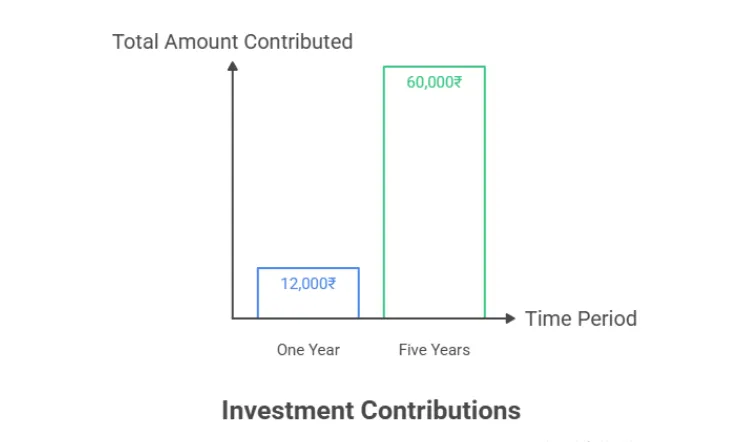
For example, an investor who contributes ₹1,000 each month invests ₹12,000 over one year and ₹60,000 over five years, excluding any investment gains or losses.
If investments generate positive returns, the overall value may grow beyond the amount contributed. Nevertheless, market fluctuations can also reduce the value of investments, particularly over shorter periods.
Consequently, beginners should focus on building a regular investment habit rather than expecting immediate profits.
Investment Options for Beginners in India
Several investment options allow people to begin with relatively small amounts, depending on the provider and product requirements.
Mutual Funds and Systematic Investment Plans
Mutual funds pool money from multiple investors and invest it according to a defined strategy. A systematic investment plan, commonly called an SIP, allows investors to contribute a fixed amount at regular intervals.
Some mutual fund schemes accept SIP contributions starting at ₹100 or ₹500, although minimum amounts vary. Equity mutual funds carry market risk, while debt funds face interest rate and credit risks.
Exchange Traded Funds and Stocks
Exchange traded funds allow investors to access a basket of securities through a single listed investment. Individual stocks may also be available at relatively low prices, but a low share price does not necessarily mean a company is undervalued.
Investors should understand diversification, trading costs and market volatility before buying shares. Moreover, beginners should avoid concentrating their savings in a single company.
Government Backed Savings Options
People who prioritise capital preservation may consider eligible government backed savings products, recurring deposits or fixed deposits offered by banks.
Options such as the Public Provident Fund have specific rules concerning contributions, maturity and withdrawals. These products serve different purposes from market linked investments and should be selected according to individual financial goals.
What Financial Data Says About Investing
India’s investment landscape has expanded alongside digital financial services and greater participation in securities markets. The Securities and Exchange Board of India publishes investor education resources and market statistics that help individuals understand participation, risks and investment products.
However, the number of investors or the growth of investment accounts does not guarantee positive returns for every participant.
The key lesson for beginners is to distinguish between saving and investing. Savings products generally prioritise stability and accessibility, while market linked investments offer the potential for higher long term returns alongside the possibility of losses.
Furthermore, investors should verify product information, charges and regulatory disclosures before committing money. Reliable information is particularly important when social media posts promise unusually high or guaranteed returns.
How to Manage Risk With a Small Budget
Before Start investing, beginners should build an emergency fund that can cover essential expenses during unexpected situations. High interest debt should also be addressed because its cost may outweigh uncertain investment gains.
Additionally, investors should define their goals. Money needed within a short period may be unsuitable for volatile equity investments, while long term goals may allow greater exposure to market fluctuations, depending on personal circumstances.
Investors should also compare expense ratios, transaction charges, taxation and withdrawal restrictions. These factors can affect the final amount they receive.
Moreover, beginners should avoid borrowing money to invest and remain cautious of unregistered advisers or schemes promising guaranteed high returns. In India, SEBI registered intermediaries and official investor education resources provide useful starting points for verifying financial products and understanding risks.
What Businesses and Individuals Should Know
Investment decisions increasingly depend on accessible financial information, digital platforms and financial literacy. Technology has made it easier to research investments and monitor portfolios, but it has also increased exposure to misleading financial content and speculative trading.
Individuals should review their portfolios periodically rather than reacting to every market movement. They should also keep records of contributions, investment performance and applicable taxes.
For working professionals, even a modest monthly contribution can help establish financial discipline. Nevertheless, the right investment amount depends on income, essential expenses, existing debt and financial responsibilities.
The most sustainable approach is to start with an affordable amount, understand the risks and increase contributions only when the household budget allows.
Conclusion
Starting with little money does not prevent individuals from developing sound investment habits. Mutual funds, recurring deposits and other suitable financial products provide different ways to begin, depending on personal goals and risk tolerance. Consistency, diversification and informed decision making matter more than chasing quick returns.
BusinessInfoPro.com provides readers with finance industry updates and practical insights to support better financial decisions.
Visit BusinessInfoPro.com for more business news and financial insights.
Explore our latest coverage to stay informed about investment trends and the changing financial landscape.