





SpaceX reports strong revenue growth as Starlink and AI businesses expand, highlighting the company’s changing technology and investment strategy.
SpaceX Reports Strong Revenue Growth
SpaceX has delivered a major revenue increase in its first quarterly results as a public company, highlighting the rapid expansion of its satellite connectivity and artificial intelligence businesses.
The company reported approximately $7.8 billion in second quarter revenue, representing a 92 percent increase from about $4.1 billion in the same period a year earlier. The results exceeded market expectations and showed that SpaceX is becoming more than a traditional launch company.
At the same time, the company continues to invest heavily in infrastructure designed to support its long term ambitions.
Starlink Remains a Major Growth Engine
Starlink continues to play a central role in SpaceX’s business expansion. The satellite internet service generated approximately $4.3 billion in connectivity revenue during the quarter, an increase of nearly 66 percent compared with the previous year.
Furthermore, the company said its subscriber base had doubled to approximately 12 million. Growth across consumer, enterprise, and government customers has helped transform Starlink into an increasingly important source of recurring revenue.
Consequently, satellite connectivity is becoming an important part of the company’s broader technology strategy.
AI Becomes a New Revenue Driver
While Starlink remains significant, artificial intelligence is rapidly becoming another important source of growth. SpaceX’s AI business generated approximately $2.6 billion in second quarter revenue, representing growth of roughly 248 percent compared with the same period a year earlier.
The expansion has been supported by cloud computing agreements that allow customers to access computing capacity. According to SpaceX’s reported results, the company closed several major cloud services agreements and recorded $14.1 billion in contracted sales.
As a result, AI infrastructure is emerging as a major component of the company’s future business model.
Heavy Investment Behind the Expansion
Strong revenue growth has come alongside exceptionally high capital spending. SpaceX’s capital expenditure reached approximately $18.4 billion during the quarter, compared with about $2.83 billion a year earlier. AI related capital spending alone reached approximately $15.83 billion.
Therefore, the company’s growth story is closely connected to substantial investment in computing infrastructure, satellites, launch capabilities, and other technology.
This spending also illustrates the enormous financial requirements associated with competing in the rapidly developing AI infrastructure market.
Profitability Remains an Important Consideration
Despite the sharp increase in sales, SpaceX reported a second quarter net loss of approximately $541 million. However, that loss was significantly narrower than the roughly $1 billion loss recorded during the same period a year earlier. Adjusted EBITDA increased to approximately $3.5 billion.
This combination of strong top line growth and continued heavy investment creates an important financial picture. The company is expanding rapidly, but much of that expansion requires substantial capital.
As a result, future financial performance will depend not only on generating additional sales but also on how effectively the company converts infrastructure investment into sustainable returns.
The Changing SpaceX Business Model
Traditionally, SpaceX was primarily associated with rocket launches and space transportation. However, its latest results show a much broader business structure.
Connectivity now represents a major revenue stream, while AI computing is developing rapidly. Meanwhile, the traditional space business continues to contribute revenue through launch services.
This diversification provides a different perspective on the company and its position within the technology economy. Rather than depending on a single market, SpaceX is building businesses across telecommunications, cloud computing, artificial intelligence, and aerospace.
Technology Trends Are Reshaping Revenue
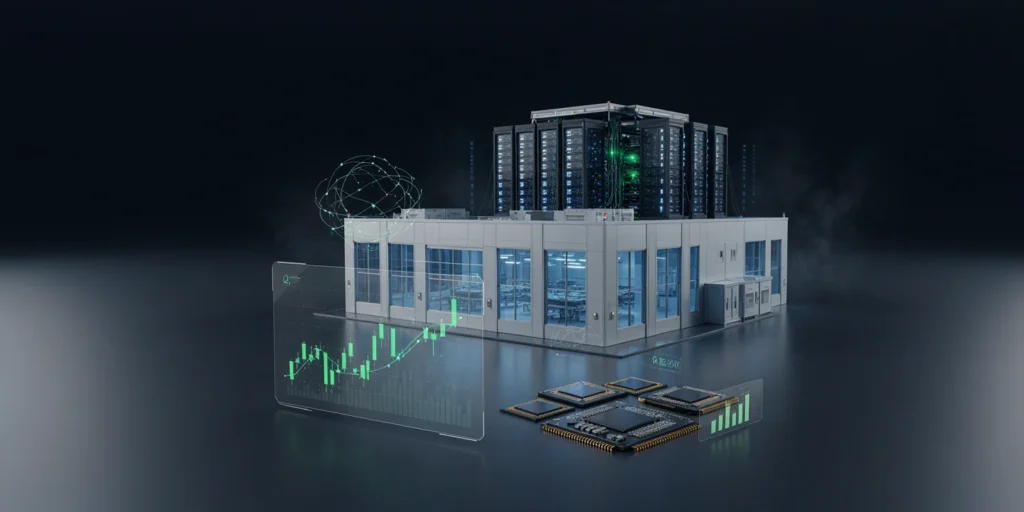
The latest results offer valuable technology insights into the growing connection between satellite networks and artificial intelligence. Modern AI systems require enormous computing resources, while satellite networks require sophisticated hardware, launch capacity, and global infrastructure.
Consequently, companies that can combine multiple technology capabilities may create new opportunities across different markets.
The development also reflects broader IT industry news, where cloud infrastructure, data centers, connectivity, and AI computing are increasingly interconnected.
Business Implications Beyond Technology
SpaceX’s expansion also has implications for finance, marketing, sales, and workforce planning. Finance industry updates increasingly focus on how companies fund large technology investments while maintaining sustainable growth.
Similarly, sales strategies and research can help businesses understand how enterprise customers are adopting new connectivity and computing services.
Marketing trends analysis also shows why companies increasingly communicate their technology capabilities as part of a broader business value proposition rather than promoting individual products in isolation.
Meanwhile, HR trends and insights may become increasingly important as advanced technology companies compete for engineers, researchers, data specialists, manufacturing professionals, and other highly skilled workers.
What Businesses Can Learn From the Growth
The latest results demonstrate the importance of identifying multiple sources of revenue growth while maintaining a clear connection between investment and customer demand.
Businesses can also learn from the way SpaceX has expanded existing infrastructure into adjacent markets. Satellite connectivity can support enterprise communications, while computing infrastructure can support AI applications and cloud services.
However, rapid expansion also requires careful financial planning. Large infrastructure investments can create significant opportunities, but they also increase the importance of cash management, capacity utilization, customer commitments, and long term demand.
Actionable Insights From the Latest Results
The SpaceX results highlight a broader business lesson. Revenue growth becomes more meaningful when companies understand what is driving that growth and whether the underlying demand can continue.
For technology businesses, monitoring customer adoption, recurring revenue, infrastructure requirements, capital expenditure, and emerging markets can provide a clearer view of future opportunities.
Furthermore, companies entering AI markets should consider the cost of computing infrastructure alongside potential revenue. Strong demand alone does not guarantee sustainable growth. Businesses must also develop efficient operations, reliable customer relationships, and scalable infrastructure.
Connect with BusinessInfoPro for informed insights that can help your organization understand changing markets and technology opportunities.
Source : globalbankingandfinance.com