





Artificial intelligence has spent years chasing bigger context windows. More available tokens have allowed models to process larger documents, longer conversations, and increasingly complex instructions. However, simply giving an AI system more information does not necessarily make it smarter or more useful.
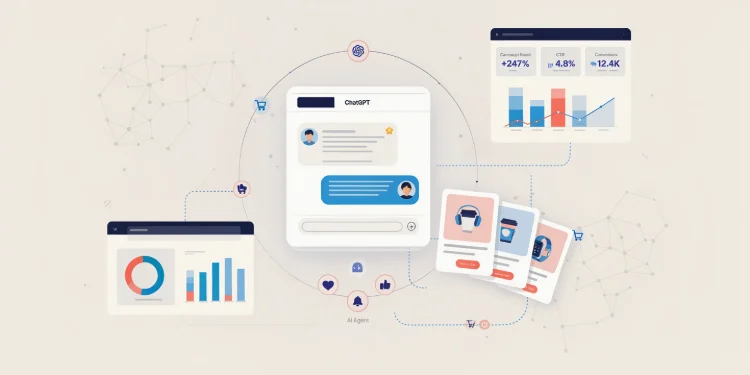
The next stage is increasingly focused on how AI systems remember what matters. This is where agentic memory becomes important. Instead of repeatedly providing an AI with the same background information, memory systems can preserve relevant knowledge and make it available when needed.
Consequently, the focus is moving from how much information an AI can temporarily process toward how effectively it can retain, organize, and use information over time.
Why Larger Context Windows Are Not Enough
A large context window can be extremely useful, particularly when an AI system needs to analyze lengthy documents or complex conversations. Nevertheless, context has practical limitations.
Providing an enormous amount of information can increase processing requirements and make it harder for an AI system to identify what is actually relevant. Moreover, users may repeatedly provide the same instructions and background details simply because the system does not retain them permanently.
This creates an important distinction between context and memory. Context is information available during a particular interaction, while memory can allow an intelligent system to preserve useful information across interactions.
What Agentic Memory Means
Agentic memory refers to memory capabilities designed for AI agents that need to operate across multiple tasks and interactions. Such systems can potentially remember previous decisions, user preferences, project information, and important events.
However, effective memory involves more than storing everything. An intelligent agent needs to determine what information is worth retaining, when it should be retrieved, and whether older information is still relevant.
Therefore, agentic memory can be viewed as an active part of AI reasoning rather than a simple digital storage system.
From Conversation to Continuous Intelligence
Traditional chat based AI often treats each interaction as a separate event. Agentic systems are expected to operate differently. They may need to understand what happened previously before deciding what to do next.
For example, an AI agent supporting a business project could remember earlier decisions, track unresolved issues, and understand the goals established during previous conversations. Consequently, the user would spend less time repeating information.
This could make AI feel less like a question and answer tool and more like a persistent digital collaborator.
Why Memory Matters for Business
The business potential of agentic memory extends across multiple departments. Sales teams could use intelligent systems that remember customer interactions and previous conversations. Sales strategies and research could therefore become more personalized and context aware.
Marketing teams could benefit from systems that retain campaign objectives, audience insights, and previous performance information. Marketing trends analysis could become more continuous because AI agents could compare current developments with historical context.
Similarly, finance teams could use memory enabled systems to track recurring analytical tasks and business assumptions while maintaining appropriate controls around sensitive information.
The Importance of Selective Memory
More memory is not automatically better. If an AI system stores every interaction without distinction, irrelevant information can accumulate and potentially influence future decisions.
Consequently, agentic memory needs mechanisms for prioritization, updating, and forgetting. An AI system should ideally recognize which information is temporary, which information is important, and which information has become outdated.
This principle is particularly important for business applications. Outdated customer preferences, old financial assumptions, or incorrect project information could produce poor recommendations.
Technology insights from the developing AI ecosystem increasingly point toward memory quality as an important factor in building reliable intelligent agents.
Privacy and Governance Become More Important
Persistent memory also creates new responsibilities. If an AI system can remember information across conversations, organizations need to understand what is being stored and how that information is protected.
Privacy controls, access permissions, retention policies, and transparent user controls will become increasingly important. Moreover, businesses must consider whether employees should be able to inspect, correct, or delete information stored by an AI agent.
HR trends and insights are particularly relevant here because workplace AI may eventually retain information about employees, projects, communication patterns, and professional activities. Responsible governance must therefore develop alongside technical capabilities.
Agentic Memory and the Evolving IT Ecosystem
The movement toward persistent AI is part of a broader transformation in software architecture. AI agents are increasingly being connected to databases, applications, APIs, enterprise platforms, and external information sources.
IT industry news continues to reflect growing interest in autonomous systems capable of performing multi step tasks. However, these systems require reliable information to make reliable decisions.
Agentic memory could become one layer of that architecture by helping AI agents maintain continuity between tasks. As a result, future enterprise systems may be designed around AI agents that continuously learn from authorized interactions while operating within defined boundaries.
How Memory Could Change Customer Experience
Customer experience could also change significantly when AI systems can remember interactions over longer periods. Customers may no longer need to repeatedly explain their situation to automated support systems.
For example, an intelligent service agent could remember previous requests, understand unresolved problems, and continue a conversation with greater context. This could make digital interactions feel more consistent and personalized.
However, businesses will need to balance personalization with privacy. Customers should understand when information is being retained and have appropriate control over their data.
The Role of Human Oversight
Even sophisticated memory systems should not operate without appropriate oversight. Memory can contain errors, outdated information, or assumptions that were valid only in a particular situation.
Therefore, human professionals may need to review important information and correct inaccurate memories. This is especially important in areas involving financial decisions, employee matters, legal requirements, or customer commitments.
Finance industry updates and other regulated sectors demonstrate why AI systems need strong governance when memory influences consequential decisions.
Preparing for the Next AI Architecture
Businesses preparing for the next generation of AI should think beyond model size. The more useful question may be how intelligent systems will manage information over time.
Organizations can begin by identifying repetitive workflows where employees constantly provide the same context. These workflows may offer opportunities for carefully designed memory systems.
Additionally, businesses should establish clear policies around information ownership, security, retention, and human review. This can help ensure that AI memory becomes a productivity advantage rather than another source of operational risk.
Future Outlook for Agentic Memory
Token maxxing is dead as a complete strategy for making AI systems more capable. Larger context windows will continue to have value, but they are only one part of the larger intelligence equation.
Agentic memory points toward AI systems that can maintain continuity, retrieve relevant information, learn from authorized interactions, and support longer running tasks. Consequently, the future of AI may depend less on how much information a model can see at once and more on whether it can remember the right information at the right moment.
For businesses, this shift could influence productivity, customer experience, automation, and digital transformation. The organizations that approach memory with both technical ambition and responsible governance may gain the strongest advantage.
Practical Insights for Business Leaders
The most important lesson is to treat AI memory as an architectural capability rather than a simple feature. Businesses should focus on relevance, accuracy, security, transparency, and control when exploring persistent AI systems.
Meanwhile, leaders can monitor emerging technology insights and evaluate how memory enabled agents could support real business objectives. The goal should not be to make AI remember everything. Instead, it should remember what helps people work better while respecting privacy and organizational boundaries.
Connect with BusinessInfoPro to discover practical strategies for navigating the next era of intelligent technology.
Source : venturebeat.com