




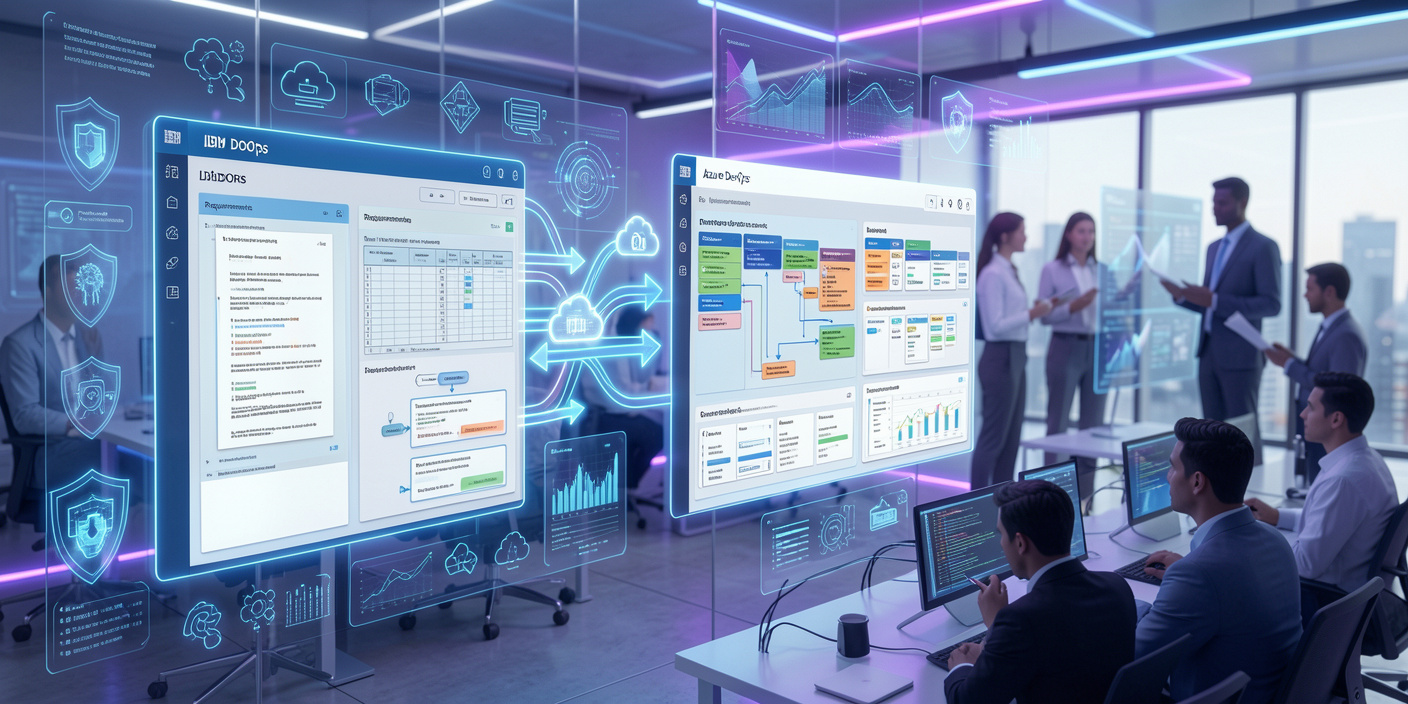
Modern software development depends on seamless collaboration between business analysts, systems engineers, quality teams, and developers. Requirements often begin in IBM DOORS while development activities continue in Azure DevOps. When these platforms operate independently, organizations face delays, inconsistent data, and communication gaps. As a result, teams spend valuable time manually updating information instead of focusing on innovation.
A connected approach helps eliminate these challenges. By synchronizing requirements with development activities, organizations gain greater visibility across every stage of the software lifecycle. Consequently, project stakeholders can make informed decisions with confidence while maintaining complete traceability.
Understanding the Role of IBM DOORS and Azure DevOps
IBM DOORS has long been trusted for managing complex requirements across industries such as aerospace, automotive, healthcare, and manufacturing. It provides structured requirement management, detailed documentation, and strong compliance support for highly regulated projects.
Azure DevOps, on the other hand, offers a collaborative environment for planning, coding, testing, and deploying software. Development teams rely on its work item tracking, source control, build automation, and release management capabilities to accelerate project delivery.
When these two platforms communicate effectively, requirement changes can be reflected in development workflows without unnecessary manual effort. Therefore, every stakeholder works with accurate and up to date information.
Benefits of Connecting Both Platforms
Real time synchronization creates a continuous flow of information between requirement management and software development. Whenever approved requirements are updated, linked development tasks remain aligned with current project expectations. Likewise, engineering teams gain immediate visibility into changing business priorities.
Furthermore, this improved visibility reduces project risks and minimizes duplicate work. Instead of maintaining multiple versions of the same information, organizations establish a single source of truth that supports collaboration across departments.
In addition, managers receive more reliable reporting because requirement status and development progress remain synchronized throughout the project lifecycle. Consequently, strategic planning becomes more accurate and efficient.
Improving Collaboration Across Teams
Successful digital transformation depends on effective communication between multiple business functions. Analysts define project goals, developers build solutions, testers validate quality, and managers monitor progress. Without integrated systems, valuable information may become isolated within individual departments.
By connecting IBM DOORS with Azure DevOps, every team works with synchronized project information. Moreover, requirement updates automatically reach development teams while completed work can be associated with original business objectives. This transparent workflow encourages accountability and improves decision making.
Similarly, executive leadership benefits from clearer project visibility, making it easier to evaluate delivery timelines and business outcomes.
Strengthening Compliance and Traceability
Many industries operate under strict regulatory requirements where every software change must be linked to approved business requirements. Manual documentation often introduces errors that increase compliance risks.
An integrated environment strengthens traceability by connecting requirements, development tasks, testing activities, and release information. As a result, audit preparation becomes significantly easier because teams can quickly demonstrate how every requirement was implemented and validated.
Equally important, organizations reduce the likelihood of overlooked changes that could affect product quality or regulatory compliance.
Supporting Modern Digital Transformation
Organizations continue investing in automation to improve operational efficiency. Integrated engineering platforms support this transformation by reducing repetitive administrative tasks and improving collaboration between distributed teams.
At the same time, executives benefit from better reporting and faster access to project metrics. This allows leadership to identify risks earlier while allocating resources more effectively. Consequently, businesses can respond to changing customer expectations with greater agility.
These improvements also contribute to broader Technology insights that help organizations refine software delivery strategies while remaining competitive in rapidly evolving markets.
Business Value Beyond Software Development
The advantages of integration extend well beyond engineering departments. Better project visibility supports Finance industry updates by improving forecasting accuracy and budget planning. Likewise, project leaders gain stronger Sales strategies and research through improved understanding of product readiness and customer commitments.
Meanwhile, HR trends and insights become increasingly important as organizations develop collaborative engineering cultures supported by modern digital platforms. Teams working with connected systems typically experience fewer communication barriers and improved productivity.
Additionally, Marketing trends analysis benefits from faster product releases because marketing teams receive more accurate information regarding development milestones and launch schedules.
Together with ongoing IT industry news, these business functions contribute to stronger organizational performance through better cross functional collaboration.
Best Practices for Successful Integration
Organizations should begin by defining clear synchronization objectives before implementing any integration strategy. Establishing consistent naming conventions, ownership responsibilities, and governance policies creates a reliable foundation for long term success.
Furthermore, regular monitoring ensures synchronization remains accurate as projects evolve. Equally important, stakeholders should periodically review workflows to identify opportunities for additional automation and process improvements.
Although technology enables integration, successful adoption ultimately depends on well defined business processes and effective communication across every department.
Valuable Insights for Long Term Success
Organizations achieve the greatest value from connected engineering platforms when integration supports both technical execution and business strategy. Rather than viewing synchronization as a simple technical feature, leaders should treat it as an investment that strengthens collaboration, transparency, and continuous improvement across the enterprise.
As digital transformation accelerates, businesses that combine requirement management with agile development platforms will be better positioned to deliver higher quality software while responding quickly to changing customer and market demands.
Connect with BusinessInfoPro to discover the latest business technology innovations and expert industry perspectives.