





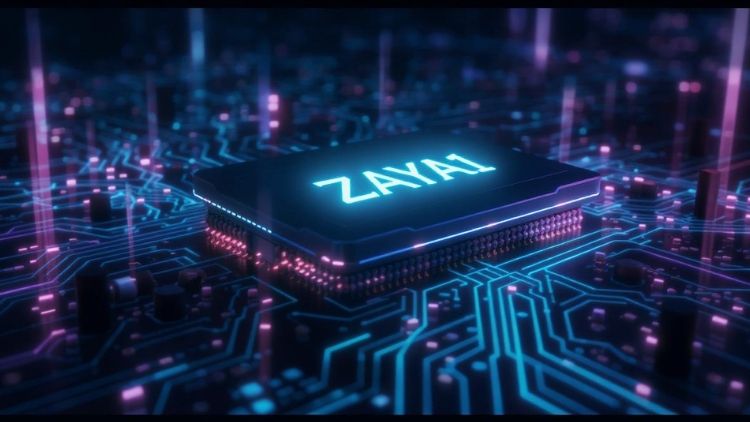
The artificial intelligence research landscape has reached another important milestone as the ZAYA1 AI model, powered by AMD GPUs, successfully advances its training capabilities. The achievement highlights the growing role of high-performance computing in accelerating AI development and demonstrates how modern GPU architectures are enabling faster, more efficient, and highly scalable AI training.
As organizations across industries increasingly rely on artificial intelligence for innovation, breakthroughs like ZAYA1 showcase the powerful combination of advanced AI models and cutting-edge hardware infrastructure.
AMD GPUs Accelerate ZAYA1 Training Performance
Training modern AI models requires enormous computational resources, especially when working with vast datasets and complex neural network architectures. By leveraging AMD’s advanced GPU technology, the ZAYA1 project has significantly improved training efficiency, reduced processing bottlenecks, and accelerated model convergence.
AMD GPUs are designed with high memory bandwidth and parallel processing capabilities, allowing large volumes of data to be processed simultaneously. This architecture enables researchers to execute more training iterations within shorter periods, helping the model learn faster while improving overall performance and reliability.
The successful milestone demonstrates how GPU acceleration is becoming an essential component of next-generation AI development.
Scalability Powers the Next Generation of AI Models
As AI models continue to expand in size and complexity, scalability has become one of the most critical challenges facing researchers. ZAYA1 addresses this challenge through AMD’s distributed GPU infrastructure, which supports efficient parallel processing across multiple computing nodes.
Large-scale AI systems often involve billions of parameters spread across deep neural networks. Managing these workloads requires substantial computing power and seamless coordination between hardware resources. AMD’s GPU ecosystem enables ZAYA1 to scale efficiently without sacrificing performance, allowing researchers to experiment with larger datasets and more sophisticated learning techniques.
This capability is particularly valuable as organizations seek to develop AI systems capable of handling increasingly complex real-world applications.
Energy Efficiency Supports Sustainable AI Development
While AI innovation continues to accelerate, concerns around energy consumption and operational costs are growing. Training advanced AI models often demands significant amounts of electricity, creating both financial and environmental challenges.
One of the notable advantages of AMD GPUs in the ZAYA1 project is their ability to balance performance with energy efficiency. By optimizing computational throughput while minimizing unnecessary power usage, the platform enables faster training without dramatically increasing energy consumption.
For research institutions, technology companies, and enterprises investing in large-scale AI initiatives, energy-efficient computing solutions are becoming a key factor in long-term sustainability and cost management.
Expanding AI Applications Across Multiple Industries
The significance of ZAYA1 extends far beyond research laboratories. Designed as a versatile AI platform, the model supports a wide range of applications, including natural language processing, computer vision, predictive analytics, and autonomous systems.
With AMD GPUs accelerating its training process, ZAYA1 can process complex datasets more effectively and generate insights at greater speed. This capability has the potential to benefit industries such as healthcare, finance, manufacturing, logistics, and customer service.
Faster model development and deployment allow organizations to bring AI-powered solutions to market more quickly, helping improve operational efficiency, decision-making, and innovation.
The Growing Importance of AI-Hardware Collaboration
The success of ZAYA1 highlights the increasing collaboration between AI developers and hardware manufacturers. As AI systems become more advanced, hardware performance plays a crucial role in determining the speed, scalability, and effectiveness of model training.
AMD’s continued investment in high-performance GPU technologies aligns with the growing computational demands of artificial intelligence. This partnership between software innovation and hardware advancement enables researchers to push the boundaries of what modern AI systems can achieve.
Industry experts believe such collaborations will become even more important as future AI models require greater computational power and more efficient infrastructure.
What This Milestone Means for the Future of AI Research
The achievement reached by ZAYA1 represents more than a technical success—it offers a glimpse into the future of AI development. By utilizing GPU-accelerated infrastructure, researchers can overcome traditional training limitations and focus on creating more capable, accurate, and innovative AI systems.
Advanced hardware solutions enable faster experimentation, quicker optimization cycles, and broader research opportunities. As a result, AI teams can accelerate innovation while reducing the time required to move from concept to deployment.
The success of ZAYA1 may encourage more organizations to adopt GPU-powered AI frameworks, further driving progress across scientific research, enterprise applications, and emerging technologies.
Industry Experts Recognize the Significance of the Breakthrough
The AI community has responded positively to ZAYA1’s latest achievement, viewing it as evidence of the growing impact of GPU-accelerated computing on artificial intelligence development. Experts point to the improvements in efficiency, scalability, and training performance as indicators of where the industry is headed.
Market analysts also believe that milestones like this will contribute to broader adoption of advanced GPU infrastructure in both academic and commercial environments. As businesses increasingly depend on AI-driven insights and automation, the demand for powerful and efficient computing platforms is expected to continue rising.
The successful training milestone achieved by the ZAYA1 AI model demonstrates the transformative impact of AMD GPU technology on modern artificial intelligence research. Through enhanced processing power, scalable infrastructure, and improved energy efficiency, AMD GPUs have enabled ZAYA1 to reach new levels of performance while supporting the growing demands of advanced AI development.
As AI models continue to evolve, the combination of innovative algorithms and powerful hardware will remain a driving force behind future breakthroughs. ZAYA1’s progress serves as a strong example of how GPU-accelerated computing is shaping the next generation of artificial intelligence and unlocking new possibilities across industries worldwide.
Stay updated on the latest developments in artificial intelligence, GPU innovation, high-performance computing, and emerging technology trends with BusinessInfoPro.