





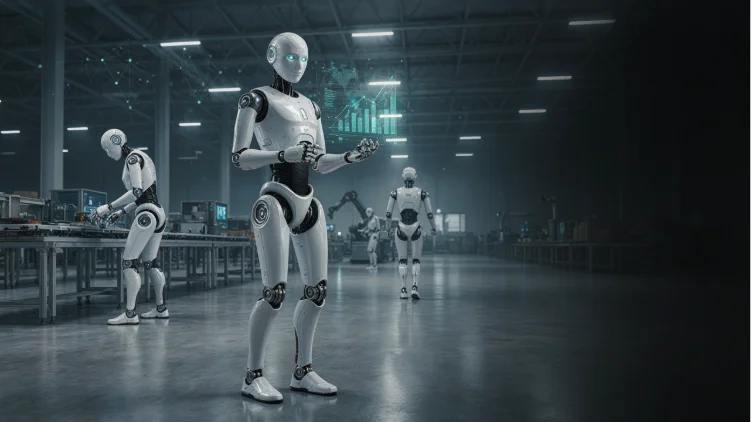
The global robotics industry is moving into a significant new phase as humanoid machines transition from technology demonstrations toward practical commercial applications. According to International Data Corporation, global humanoid robot shipments approached 25,000 units during the first half of 2026, representing growth of 432.1 percent compared with the same period a year earlier.
Among the companies driving this expansion, Agibot emerged as the leading supplier during the period. The company shipped more than 8,600 humanoid robots and accounted for approximately 35 percent of worldwide shipments, according to the latest IDC data.
This growth highlights a broader shift in the robotics market. Instead of focusing only on demonstrations and technical capabilities, manufacturers are increasingly looking at how robots can operate reliably in real business environments.
Agibot Takes the Lead
Agibot’s shipment performance demonstrates how quickly the humanoid robotics market is developing. The company has expanded production while also increasing deployments across commercial and industrial environments.
Furthermore, Agibot reached 20,000 cumulative robots produced in September 2026, indicating that manufacturing scale is becoming an increasingly important part of the competitive landscape.
The company’s growing presence also reflects a wider movement toward embodied artificial intelligence. Robots are expected to understand physical environments, respond to changing conditions and perform tasks rather than simply execute predetermined movements.
China Strengthens Its Robotics Position
China is playing a particularly important role in the expansion of humanoid robotics. IDC data shows that Chinese humanoid robot shipments exceeded 19,000 units during the first half of 2026, representing approximately 77.9 percent of global shipments. Chinese manufacturers also accounted for more than 95 percent of global shipments during the period.
Several factors are supporting this momentum. A strong manufacturing ecosystem, expanding investment and government support are helping robotics companies accelerate product development and deployment.
In addition, manufacturers can benefit from an established network of component suppliers and technology companies. Consequently, improvements in production efficiency and component availability can contribute to lower costs and faster commercialization.
From Demonstrations to Real Business Applications
One of the most important developments is the expansion of robots into real world operating environments. IDC says applications are spreading across industrial manufacturing, retail, logistics, tourism and consumer markets.
For example, Agibot has expanded deployments into retail environments, where its robots can assist with customer greeting, product information and store guidance. The company has also worked with Chimelong on a deployment involving more than 300 robots across entertainment, hospitality, retail and visitor services.
As a result, the discussion around robotics is changing. Businesses are increasingly asking whether these machines can deliver measurable value, improve productivity and operate consistently rather than simply whether they can perform impressive demonstrations.
Physical AI Becomes a Competitive Advantage
The rise of humanoid robotics is closely connected with the development of physical AI. Traditional software operates within digital environments, whereas embodied systems must perceive physical surroundings and interact with them.
Therefore, successful robotic systems require more than advanced hardware. They need environmental understanding, task planning, manipulation capabilities and continuous learning. IDC notes that competition is increasingly shifting from individual hardware specifications toward broader embodied intelligence capabilities.
This development creates opportunities across the technology ecosystem. Hardware manufacturers, AI developers, software companies and system integrators can all play a role in building the next generation of intelligent machines.
What This Means for Businesses
The rapid growth in humanoid robot shipments could have a meaningful impact on business strategy. Manufacturing companies may explore robots for repetitive physical tasks, while retailers could examine their potential for customer assistance and operational support.
Meanwhile, HR leaders will need to consider how robotics changes workplace responsibilities and employee skills. HR trends and insights are therefore becoming increasingly connected with automation, reskilling and workforce planning.
Technology insights and IT industry news can also help business leaders understand where robotics is developing fastest and which applications are becoming commercially viable.
Investment and Market Opportunities
The expansion of robotics is also creating new opportunities for investors and technology providers. As production volumes increase, demand could grow for sensors, actuators, AI systems, robotics software, batteries and supporting infrastructure.
Finance industry updates can provide useful context for organizations evaluating investment opportunities in this emerging sector. At the same time, Sales strategies and research can help robotics companies identify industries where automation can provide the strongest commercial value.
Marketing trends analysis will also become relevant as businesses begin communicating the benefits of robotic technology to customers, employees and investors.
Challenges Behind the Growth
Despite impressive shipment growth, humanoid robotics still faces important challenges. Businesses need reliable systems that can operate safely, efficiently and consistently in unpredictable environments.
Cost is another major consideration. A robot may demonstrate strong technical capabilities, but commercial adoption depends on whether its productivity benefits justify the investment.
Moreover, companies must consider maintenance, employee training, integration with existing systems and workplace safety. Consequently, successful deployment will require a broader strategy rather than simply purchasing robotic hardware.
What Businesses Should Watch Next
The next stage of the market will likely focus increasingly on deployment quality and measurable business outcomes. IDC expects global humanoid robot shipments to exceed 750,000 units by 2030 as industrial, commercial service and consumer applications expand.
For businesses, the key lesson is that robotics should be evaluated through practical use cases. Organizations can begin by identifying repetitive or physically demanding activities where automation could improve efficiency.
At the same time, leaders should monitor technology maturity, total ownership costs and workforce requirements before making large investments. By combining Technology insights with business planning, companies can prepare for a future in which intelligent machines become part of everyday operations.
Actionable Insights for Business Leaders
The latest shipment data suggests that humanoid robotics is moving beyond experimentation and toward broader commercial adoption. Businesses should therefore start evaluating where physical AI could solve genuine operational problems rather than adopting robotics simply because the technology is attracting attention.
Organizations that begin testing focused use cases, measuring productivity and preparing employees for human and machine collaboration can build valuable experience before large scale adoption accelerates.
Reach out to BusinessInfoPro for practical business insights that help you understand emerging technologies and make informed strategic decisions.
Source : roboticsandautomationnews.com