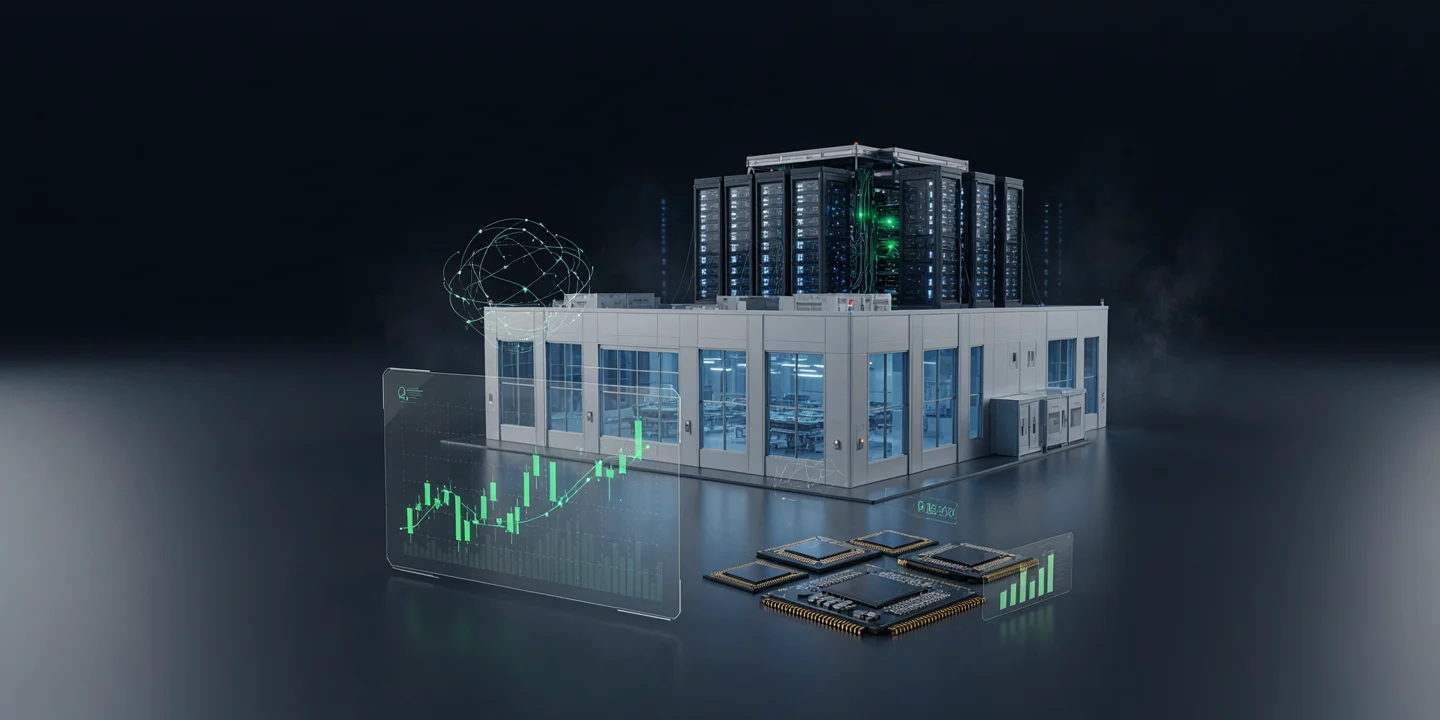







The artificial intelligence revolution is accelerating at an unprecedented pace, and every advancement in computing power plays a critical role in shaping the future. As organizations invest heavily in AI-driven technologies, the demand for faster, more efficient, and cost-effective hardware continues to grow. Amid this competitive landscape, Microsoft has been working on a proprietary AI chip designed to strengthen its position in the AI ecosystem.
However, reports indicate that Microsoft’s highly anticipated Next-Gen AI Chip, originally expected to enter mass production in 2025, has been delayed until 2026. The development has sparked industry discussions about Microsoft’s AI strategy, hardware ambitions, and its ability to compete with established chip leaders such as NVIDIA, Google, and Amazon.
Microsoft’s Ambitious AI Hardware Vision Faces a Delay
Microsoft’s long-term objective has been clear: reduce reliance on third-party hardware providers and create a customized silicon ecosystem optimized for artificial intelligence workloads. Currently, much of Microsoft’s AI infrastructure depends on NVIDIA GPUs, which power Azure AI services, Copilot applications, and advanced machine learning operations.
The Next-Gen AI Chip was envisioned as a key step toward achieving greater control over AI performance, efficiency, and scalability. However, manufacturing challenges, ongoing design refinements, and performance optimization efforts have reportedly pushed the production timeline into 2026.
While the delay may appear to be a setback, it also highlights the complexity involved in building advanced AI hardware capable of supporting next-generation enterprise workloads.
Why Microsoft’s AI Chip Matters
In today’s AI economy, controlling hardware has become nearly as important as developing powerful software. Companies that successfully integrate hardware, cloud infrastructure, and AI models gain a significant competitive advantage.
Microsoft’s Next-Gen AI Chip represents a strategic move toward vertical integration. By developing custom silicon, the company aims to optimize AI processing across its Azure cloud platform while improving efficiency and reducing operating costs.
The chip is expected to enhance performance for demanding AI tasks, including:
- Training large language models
- Running generative AI applications
- Supporting enterprise AI assistants
- Accelerating cloud-based machine learning workloads
Custom-designed hardware could enable Microsoft to deliver faster processing speeds, improved scalability, and better energy efficiency compared to relying solely on third-party solutions.
What Is Causing the Production Delay?
Several factors appear to be contributing to the postponement of Microsoft’s AI chip rollout.
The Complexity of Advanced AI Chip Design
Unlike traditional processors, AI accelerators require specialized architectures capable of handling massive amounts of data simultaneously. Engineers must balance computing power, energy consumption, memory bandwidth, and thermal efficiency while ensuring reliability at scale.
Even small design adjustments can require extensive testing and validation, making delays common in cutting-edge semiconductor development.
Semiconductor Supply Chain Challenges
Although global supply chains have improved since the pandemic, advanced semiconductor manufacturing remains highly competitive.
Leading foundries such as TSMC are responsible for producing many of the world’s most sophisticated chips. These facilities are already managing enormous demand from major technology companies, including NVIDIA, AMD, Apple, and Qualcomm.
As Microsoft enters this highly competitive production environment, securing manufacturing capacity and achieving production readiness becomes increasingly challenging.
Integration Across the Microsoft AI Ecosystem
Another key factor may be Microsoft’s focus on ensuring seamless compatibility between its chip and broader AI ecosystem.
The company is reportedly optimizing integration with:
- Azure Machine Learning
- Microsoft Copilot
- OpenAI-powered services
- Enterprise AI applications
Rather than rushing to market, Microsoft appears to be prioritizing a fully integrated solution that delivers consistent performance across its cloud and AI platforms.
How the Delay Could Impact Microsoft’s AI Roadmap
The postponement of the Next-Gen AI Chip may slightly affect Microsoft’s timeline for achieving hardware independence. For the foreseeable future, the company will likely continue relying heavily on NVIDIA GPUs to power many of its AI initiatives.
This continued dependency could increase infrastructure costs and potentially limit the pace at which certain AI services scale.
However, Microsoft’s broader AI strategy remains strong. The company continues to invest billions in AI research, Azure infrastructure expansion, and its partnership with OpenAI. These investments ensure that the delay does not significantly alter Microsoft’s long-term AI ambitions.
In fact, the additional development time could allow Microsoft to incorporate newer AI architecture innovations, potentially resulting in a more powerful and future-ready chip when it eventually launches.
The Growing Battle for AI Hardware Leadership
The AI hardware market has become one of the most competitive sectors in technology.
NVIDIA currently dominates the market with its H100 and upcoming Blackwell GPU platforms, which have become the industry standard for AI training and inference workloads.
At the same time, other cloud giants have developed their own specialized AI hardware:
- Google continues to expand its Tensor Processing Units (TPUs).
- Amazon is advancing its Trainium and Inferentia chips.
- Meta is increasing investment in custom AI silicon.
- Microsoft is building its own AI-focused processor ecosystem.
Although Microsoft is entering a field populated by experienced chip designers, the company possesses a unique advantage: its ability to tightly integrate hardware, software, cloud infrastructure, and AI services into a unified platform.
If executed successfully, Microsoft’s custom chip could offer significant benefits in performance, energy efficiency, and operational cost savings.
Industry Reactions and Market Expectations
Industry analysts have responded to the delay with a mix of caution and optimism.
Some view the postponement as a normal part of developing advanced semiconductor technology, noting that delays are common when building highly specialized AI hardware.
Others see it as evidence of the enormous challenge involved in competing with NVIDIA’s mature ecosystem and years of expertise.
Despite these concerns, many experts believe Microsoft’s decision to prioritize refinement over speed could ultimately deliver better long-term results. Large-scale AI infrastructure investments are measured in years rather than months, making product quality and ecosystem compatibility more important than short-term timelines.
Microsoft’s ongoing collaboration with OpenAI also continues to strengthen its position. Future generations of AI models may eventually benefit from hardware specifically optimized for Microsoft’s cloud infrastructure and AI services.
What This Means for the Future of AI
The delay of Microsoft’s Next-Gen AI Chip highlights an important reality of the AI industry: software innovation often moves faster than hardware development.
While AI models continue evolving rapidly, the infrastructure required to support them demands years of research, engineering, testing, and manufacturing. This challenge is driving major technology companies to invest heavily in custom silicon as they seek greater control over performance, efficiency, and scalability.
When Microsoft’s AI chip finally reaches production, it could mark a significant milestone in the evolution of enterprise AI infrastructure. A successful launch would strengthen Microsoft’s ability to deliver optimized AI services while reducing reliance on external hardware providers.
Final Thoughts
Although Microsoft’s Next-Gen AI Chip has been delayed until 2026, the move should be viewed as a strategic pause rather than a major setback. The company remains one of the leading forces in artificial intelligence, supported by Azure, Copilot, and its deep partnership with OpenAI.
As the competition for AI hardware supremacy intensifies, success will depend not only on speed but also on precision, ecosystem integration, and long-term vision. Microsoft’s commitment to building a powerful proprietary AI chip reflects its determination to shape the next era of enterprise computing.
For businesses navigating the rapidly evolving AI landscape, the story serves as a reminder that the future of artificial intelligence will be defined as much by breakthroughs in hardware as by advances in software. Stay connected with Businessinfopro for the latest insights on AI innovation, enterprise technology, and the future of digital transformation.