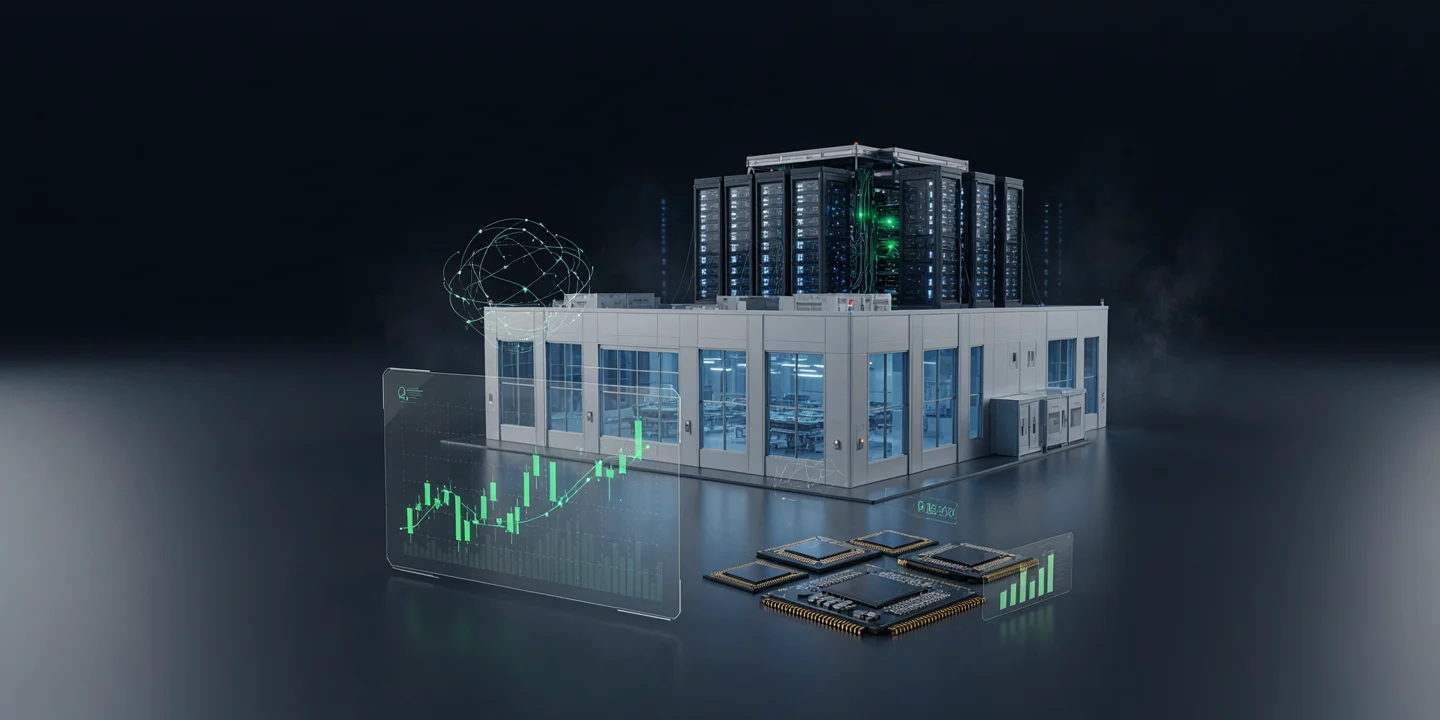







Technology giant IBM has announced the launch of one of the fastest computers on Earth, positioning itself at the forefront of high-performance computing (HPC). The new system, designed for advanced research and artificial intelligence applications, promises unprecedented computational speed, capable of solving complex problems at scales previously unattainable.
Breaking Speed Records
IBM’s ultra-fast computer leverages cutting-edge processor architecture and high-speed interconnects to deliver performance that rivals some of the world’s most powerful supercomputers. With its new design, IBM claims the system can execute billions of calculations per second, setting a new benchmark for both scientific and commercial applications.
The computing power is expected to accelerate breakthroughs in areas such as climate modeling, molecular research, financial simulations, and artificial intelligence. By increasing the speed at which large datasets can be processed, IBM enables researchers and enterprises to derive insights faster and more efficiently.
Innovations in Processor Architecture
At the core of IBM’s new supercomputer is a next-generation processor architecture that emphasizes parallel processing and energy efficiency. Unlike traditional computing systems, which rely on sequential execution of tasks, this architecture allows multiple calculations to occur simultaneously, drastically reducing computation time.
High-speed memory integration and optimized interconnects further enhance the system’s performance, ensuring low latency and high throughput. This combination of hardware innovations makes IBM’s ultra-fast computer a critical tool for solving data-intensive and computationally heavy problems.
Applications Across Industries
The potential applications of IBM’s ultra-fast computer span multiple industries. In healthcare, the system can simulate complex protein structures to accelerate drug discovery. Financial institutions can leverage its computational power to model market scenarios and manage risk more accurately. In energy and climate research, scientists can run large-scale simulations that inform sustainable solutions and policy decisions.
Moreover, IBM’s system is particularly suited for AI and machine learning workloads, allowing organizations to train large models faster and perform real-time analytics on massive datasets. This represents a significant step forward for enterprises seeking to harness AI’s full potential.
Collaboration With Research Institutions
IBM has also announced collaborations with leading research institutions to deploy the ultra-fast computer for academic and scientific initiatives. By providing access to this level of computational power, the company hopes to accelerate discovery in fields ranging from quantum physics to genomics.
The partnership approach ensures that high-performance computing is not limited to a handful of corporations but is available to scientists and researchers tackling some of the world’s most pressing challenges.
Environmental and Efficiency Considerations
In addition to sheer speed, IBM emphasizes sustainability and energy efficiency in the design of the supercomputer. Advanced cooling systems, energy-optimized processors, and smart workload management contribute to reduced power consumption while maintaining peak performance.
These innovations reflect IBM’s commitment to building environmentally responsible HPC systems, addressing the growing concern over the carbon footprint of large-scale computing facilities.
Industry Implications
The unveiling of IBM’s ultra-fast computer signals a new era in high-performance computing. Competitors in the HPC space will likely accelerate efforts to match or surpass IBM’s speed benchmarks, driving rapid innovation across the industry.
Experts note that such advancements in computational power can have ripple effects across technology sectors, enabling breakthroughs in AI, big data analytics, and complex simulations that were previously unattainable due to hardware limitations.
Furthermore, enterprises adopting these systems can expect faster insights, reduced time-to-market for products, and more robust solutions in research and development. This trend underscores the growing importance of cutting-edge computing infrastructure in maintaining competitive advantage in the digital age.
Future Outlook
IBM plans to expand the availability of its ultra-fast computer to additional research centers and enterprise clients over the coming months. The company is also exploring enhancements in processor efficiency, interconnect speed, and AI integration to further push the boundaries of performance.
With the continued demand for faster data processing and more sophisticated AI models, IBM’s investment in high-performance computing sets a precedent for the next generation of supercomputing technology.
Stay updated on breakthroughs in IT, AI, and supercomputing. Visit Businessinfopro Technology News section for expert insights, updates, and industry analysis.
Source: foxbusiness.com