





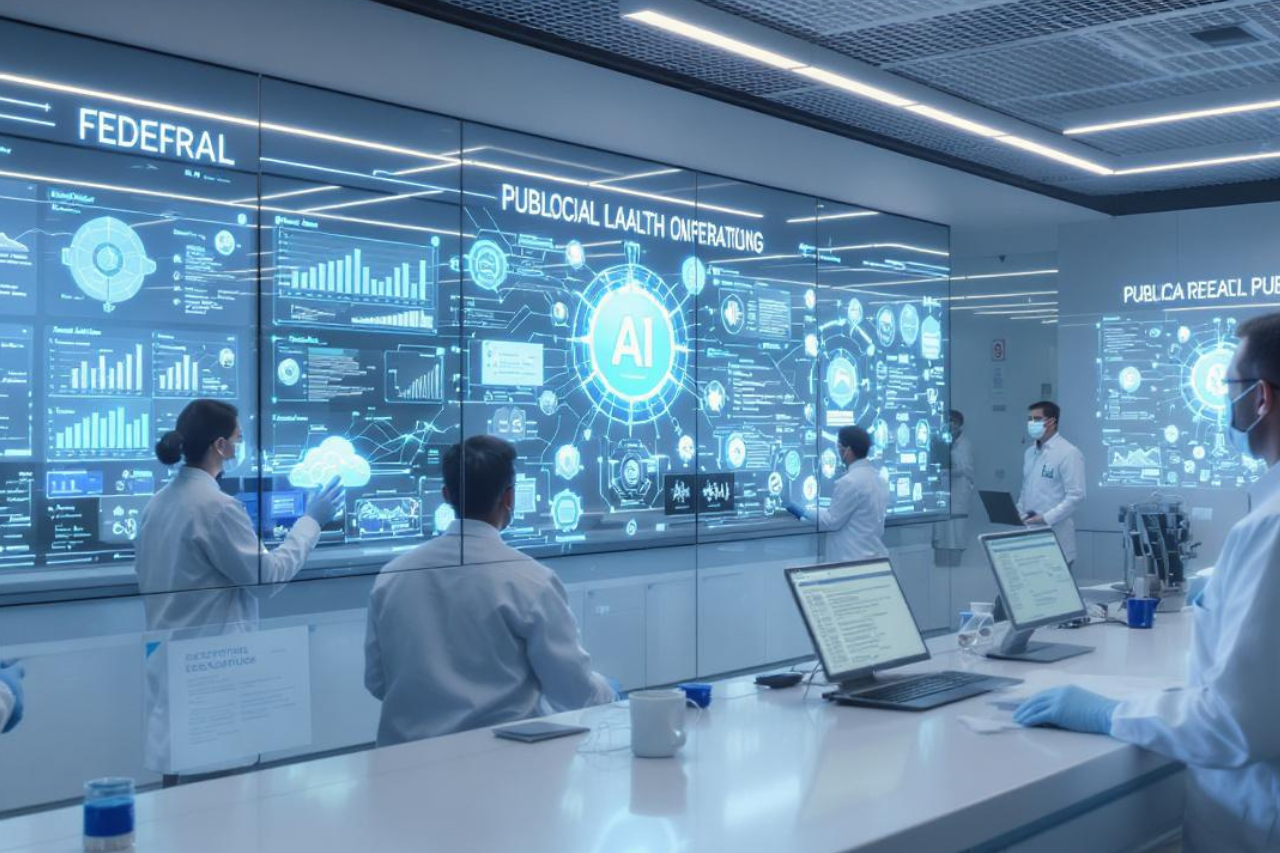
Artificial intelligence is steadily becoming a valuable resource for organizations that manage healthcare systems, scientific research, and public safety. Recently, public health agencies began evaluating advanced language models from OpenAI and Anthropic to understand how these technologies can support medical research, improve operational efficiency, and strengthen decision making across health services.
Rather than replacing healthcare professionals, these AI systems are being explored as assistants that can process complex information, summarize research findings, and help experts respond more quickly to emerging health challenges. As a result, this initiative represents an important step toward responsible AI adoption in government healthcare environments while offering fresh Technology insights for organizations across multiple industries.
Why Public Health Agencies Are Exploring AI
Healthcare organizations manage enormous amounts of scientific literature, clinical guidance, policy documents, and public health data every day. Consequently, reviewing and interpreting this information manually often requires significant time and specialized expertise.
Testing advanced AI models allows agencies to determine whether these systems can accelerate research workflows, improve document analysis, and support evidence based decisions without compromising accuracy or security. Furthermore, officials are evaluating how AI performs under real world conditions while ensuring human experts remain responsible for final decisions.
This careful approach demonstrates that AI adoption in public services is becoming more structured, transparent, and focused on measurable outcomes.
Comparing OpenAI and Anthropic Models
Both OpenAI and Anthropic have developed powerful language models capable of understanding natural language, generating summaries, answering technical questions, and assisting with knowledge intensive tasks. However, each company follows its own development philosophy regarding safety, transparency, and model behavior.
During these evaluations, agencies are expected to compare response quality, factual consistency, reliability, security controls, and usability for healthcare professionals. Meanwhile, researchers will likely examine how each model handles medical terminology, policy interpretation, and scientific documentation under controlled conditions.
Such comparisons may help establish future standards for responsible AI deployment across government institutions.
Potential Benefits for Healthcare Operations
If these evaluations produce positive results, AI could significantly improve several administrative and research activities throughout public health organizations.
Medical researchers may spend less time reviewing lengthy publications because AI can organize information into concise summaries. Likewise, healthcare administrators could analyze reports more efficiently while identifying relevant regulations and operational recommendations.
In addition, emergency response teams may benefit from faster access to verified information during rapidly changing situations. Although AI cannot replace clinical judgment, it can support professionals by reducing repetitive workloads and improving access to knowledge.
This balanced use of artificial intelligence reflects a growing trend toward practical innovation rather than complete automation.
Responsible AI Remains the Priority
Even though language models continue to improve, public health agencies recognize that healthcare requires exceptional accuracy and accountability. Therefore, testing focuses not only on performance but also on reliability, privacy protection, security standards, and regulatory compliance.
Human experts will continue validating AI generated responses before any information influences healthcare decisions. Similarly, agencies must ensure confidential data remains protected throughout every stage of AI implementation.
This emphasis on responsible governance highlights the importance of building public trust while encouraging innovation that serves society safely and ethically.
Business Impact Beyond Healthcare
The ongoing evaluation of AI within public institutions offers valuable lessons for private organizations as well. Companies across finance, technology, manufacturing, and professional services are closely monitoring these developments because government adoption often accelerates broader market confidence.
For business leaders, this represents an opportunity to rethink knowledge management, customer service, internal research, and operational efficiency. At the same time, organizations should establish governance frameworks that balance innovation with accountability.
These developments also contribute to broader IT industry news, influencing technology investment decisions and enterprise digital transformation strategies around the world.
AI Adoption Creates Opportunities Across Industries
Healthcare is only one example of how advanced AI is transforming professional environments. Similar technologies are reshaping recruitment, financial analysis, marketing operations, and sales enablement.
Business leaders following HR trends and insights are exploring AI powered recruitment support, workforce planning, employee learning, and internal communications. Likewise, organizations tracking Finance industry updates are adopting intelligent systems to improve reporting accuracy, fraud detection, forecasting, and regulatory compliance.
Meanwhile, marketing professionals continue using AI for customer segmentation, campaign optimization, content creation, and predictive analytics. These innovations are driving fresh Marketing trends analysis that helps organizations better understand changing customer expectations.
Sales teams are also leveraging AI generated recommendations, customer intelligence, and opportunity forecasting to strengthen decision making. Consequently, businesses are discovering new Sales strategies and research that improve productivity while enhancing customer engagement.
What Businesses Can Learn From Government AI Testing
Government evaluations demonstrate that successful AI adoption requires careful planning instead of rapid implementation. Organizations should first identify business problems that AI can realistically solve before investing in large scale deployments.
Equally important, companies should establish governance policies, validate AI generated outputs, protect sensitive information, and continuously monitor system performance. Moreover, employee training remains essential because AI delivers the greatest value when combined with experienced human judgment.
Businesses that adopt this balanced strategy are more likely to achieve sustainable innovation while maintaining stakeholder confidence.
Valuable Insights for Business Leaders
The evaluation of advanced AI by public health agencies signals that artificial intelligence is entering a more mature phase of adoption where reliability, transparency, and measurable business value matter more than hype. Organizations that monitor these developments can better prepare for future regulatory expectations while identifying practical opportunities for digital transformation.
Business leaders should focus on responsible implementation, continuous employee education, strong governance, and measurable business outcomes. By combining human expertise with intelligent technology, organizations can improve efficiency, strengthen decision making, and create long term competitive advantages.
Connect with BusinessInfoPro today to stay informed with expert perspectives that help your business adapt confidently in an evolving digital world.