



A strong company culture helps employees understand how decisions are made, how teams collaborate, and what the organization values. For SaaS businesses growing across markets and time zones, culture can provide the consistency needed to scale without creating unnecessary bureaucracy.
Why Culture Matters More as SaaS Companies Scale
Software as a service companies are rethinking workplace culture in 2026 as artificial intelligence, distributed work and changing employee expectations reshape how teams operate. As businesses pursue faster product development and sustainable growth, leaders are placing greater emphasis on communication, accountability, employee development and collaboration.
Building larger teams is no longer simply a recruitment challenge. Companies must also establish clear responsibilities, maintain consistent standards and help employees adapt to new technology. Consequently, workplace culture has become an important part of operational planning for growing SaaS businesses.
The latest workplace research also highlights the challenge. Companies need to improve productivity without increasing pressure on employees or weakening the relationships that support innovation.
Employee Engagement Remains a Major Business Challenge
Gallup’s State of the Global Workplace 2026 report found that only 20% of employees worldwide were engaged at work in 2025. The report, published in April 2026, also found that global employee wellbeing improved slightly, although workplace engagement declined from 21% in 2024.
These findings highlight an important issue for expanding SaaS companies. Recruiting skilled professionals does not automatically create motivated teams. Employees also need meaningful responsibilities, regular feedback and confidence in their managers.
Moreover, managers play a significant role in shaping everyday workplace experiences. Clear expectations, fair performance reviews and opportunities for career development can help businesses build stronger connections between individual contributions and company objectives.
As a result, growing software companies are increasingly challenged to treat employee engagement as an operational priority rather than an occasional human resources initiative.
Artificial Intelligence Is Changing Team Structures
Artificial intelligence is becoming another important influence on SaaS workplace culture. Companies are incorporating AI into software development, customer support, marketing, research and internal operations.
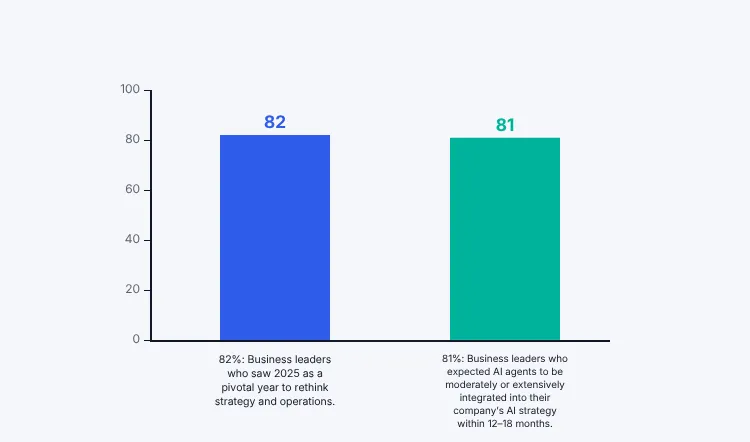
Microsoft’s 2025 Work Trend Index, based on research involving 31,000 workers across 31 countries, found that 82% of business leaders considered the year a pivotal time to rethink strategy and operations. Furthermore, 81% expected AI agents to be moderately or extensively integrated into their company’s AI strategy within the following 12 to 18 months.
These findings point towards a shift in how businesses organize work. Instead of relying exclusively on traditional departments, companies may increasingly combine employee expertise with AI tools and automated workflows.
However, successful adoption requires more than purchasing new software. Employees need practical training, clear usage guidelines and opportunities to understand how AI affects their responsibilities. Leaders must also establish appropriate human oversight, particularly when automated systems handle sensitive information or influence important business decisions.
Consequently, technology adoption and employee development need to progress together.
Flexible Work Requires Stronger Communication
Remote and hybrid arrangements continue to influence how software companies recruit, collaborate and retain talent. These models can expand access to skilled professionals beyond a company’s immediate location. However, they also require deliberate communication and coordination.
When employees work across different locations or time zones, informal conversations become less frequent. Without clear processes, teams can experience duplicated work, delayed decisions and uncertainty about ownership.
To address these challenges, SaaS companies can establish written project updates, documented decisions, shared performance goals and predictable team meetings. Additionally, managers should distinguish between essential collaboration and meetings that interrupt focused work.
A well defined communication system allows employees to understand priorities without depending on constant supervision. This approach can help companies preserve flexibility while maintaining accountability as their workforce grows.
Leadership and Learning Support Sustainable Growth
Company culture often changes as a startup moves from a small founding team to a larger organization. Informal decisions that once worked for a handful of employees may become difficult to manage across multiple departments.
Therefore, leaders need to establish consistent management practices without creating unnecessary bureaucracy. Clear reporting structures, transparent promotion criteria and regular feedback can help employees understand how decisions are made.
Furthermore, ongoing learning is becoming increasingly important as SaaS products and business processes evolve. Technical employees may need new AI skills, while sales, marketing and customer success teams must adapt to changing customer expectations and digital tools.
Companies can support this transition through internal training, mentoring, knowledge sharing and dedicated learning time. These practices can also help employees prepare for new responsibilities as the business expands.
For organizations following HR trends and insights, the challenge is to connect workforce development with measurable business needs rather than treating training as a separate activity.
The Business Impact of a Scalable Culture
A strong workplace culture can support several areas of SaaS performance. Clear communication can reduce operational confusion, while effective management can help teams respond to customer needs more consistently.
Additionally, companies that encourage knowledge sharing can reduce dependence on individual employees and make it easier for new hires to contribute. Documented processes also help organizations maintain service quality as customer numbers and product complexity increase.
These priorities connect workplace culture with broader technology insights and IT industry news. They can also influence sales strategies and research, marketing trends analysis and finance industry updates because departments must coordinate around shared goals.
Nevertheless, culture alone cannot guarantee growth. Product quality, customer demand, pricing, financial discipline and market conditions remain important factors. Companies should therefore assess cultural initiatives alongside business outcomes, employee feedback and customer performance.
What Businesses Should Know
SaaS companies planning to scale in 2026 should focus on a few practical priorities.
- Define clear responsibilities so employees understand ownership, deadlines and performance expectations.
- Use AI responsibly by providing training, setting safeguards and maintaining human oversight.
- Measure employee engagement through regular feedback, manager conversations and retention data.
- Improve communication with documented decisions, shared workflows and purposeful meetings.
- Invest in professional development to prepare employees for changing roles and business requirements.
- Review culture as the company grows to ensure policies and management practices remain useful across departments.
Ultimately, scalable workplace culture depends on more than employee benefits or company values displayed on a website. It requires consistent leadership, effective systems and a working environment that enables people to perform well as business demands change.
For growing SaaS companies, the priority in 2026 is to build teams that can adapt, collaborate and deliver results without sacrificing employee wellbeing.
Stay informed about business growth, technology developments and workplace trends with BusinessInfoPro.com.
Explore more business insights and industry updates to support smarter decisions in a rapidly changing digital economy.