





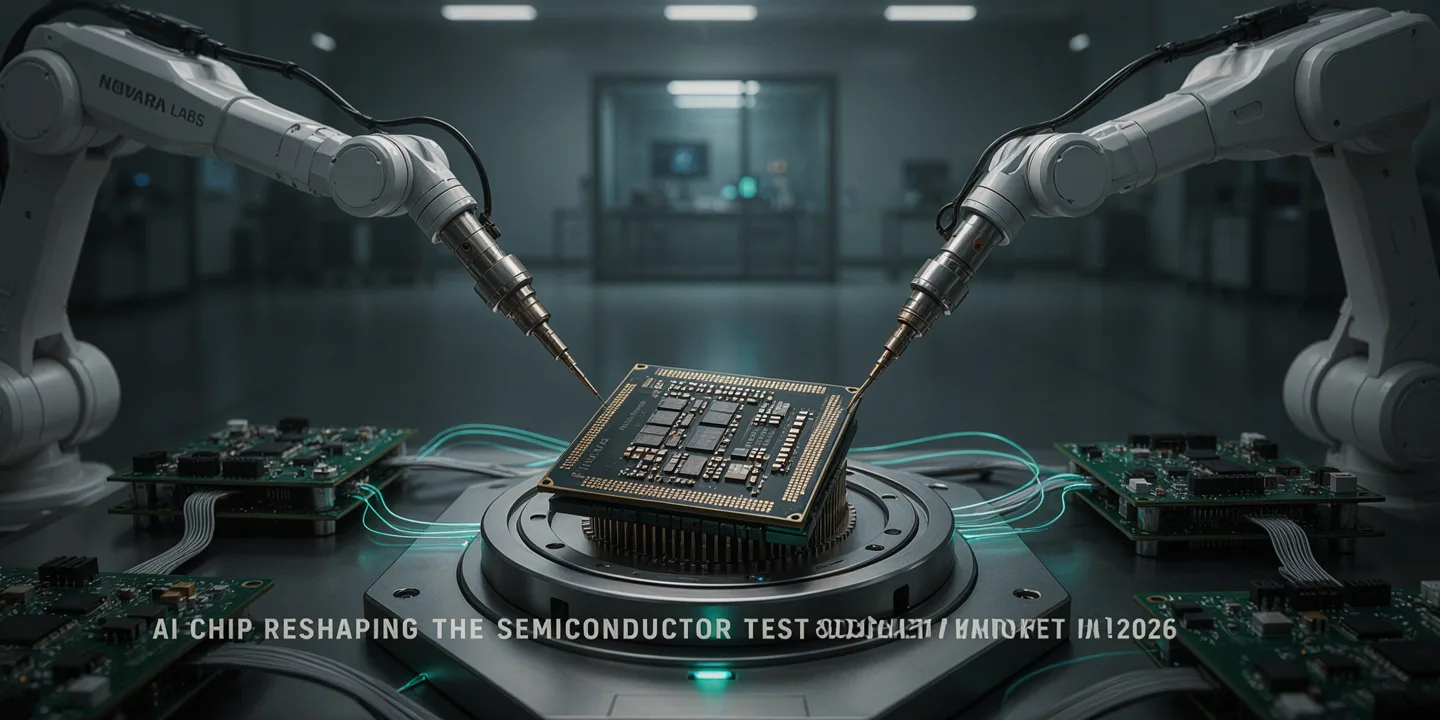
Artificial intelligence is changing the semiconductor industry at an extraordinary pace. As AI applications become more demanding, chip manufacturers are developing processors with greater computing power, higher bandwidth, and increasingly complex architectures. Consequently, semiconductor testing is also entering a new phase.
AI chips require extensive validation before they reach data centers, enterprise systems, consumer devices, and other technology environments. Therefore, semiconductor test sockets are becoming increasingly important because they provide a reliable interface between a chip and the testing system.
The shift is particularly significant in 2026 as manufacturers focus on improving performance while controlling production costs and maintaining quality.
Why Semiconductor Test Sockets Matter More for AI
Traditional chips can already require sophisticated testing. However, AI processors introduce additional challenges because they often contain advanced packaging, higher pin counts, greater thermal requirements, and complex electrical characteristics.
As a result, testing equipment must support accurate measurements under demanding operating conditions. Semiconductor test sockets allow engineers to connect chips securely during validation without permanently attaching them to testing boards.
Moreover, advanced sockets can help manufacturers evaluate different chip designs more efficiently. This flexibility becomes valuable when semiconductor companies need to test multiple iterations before moving into high volume production.
Advanced Packaging Is Changing Socket Requirements
AI computing is encouraging semiconductor manufacturers to explore advanced packaging technologies. Chiplets, high bandwidth memory integration, and increasingly sophisticated package designs are changing how processors are constructed.
Therefore, socket manufacturers must adapt their products to accommodate different package sizes, contact arrangements, thermal conditions, and electrical requirements.
In particular, high performance AI processors can generate substantial heat during testing. Consequently, thermal management has become an important consideration in socket design. Better materials and improved mechanical structures can help maintain stable connections while supporting demanding test environments.
These developments demonstrate how Technology insights are increasingly connected to semiconductor manufacturing, hardware engineering, and infrastructure innovation.
Demand for Greater Testing Accuracy
AI chips are designed to perform highly complex workloads. Because even minor manufacturing defects can affect performance, testing accuracy has become more important.
Meanwhile, semiconductor manufacturers are under pressure to improve yields and reduce costly production failures. Advanced test sockets can support repeatable testing by maintaining consistent electrical connections between the device and testing platform.
Furthermore, durability matters because high volume manufacturing can require sockets to perform reliably through many testing cycles. Manufacturers therefore need socket technologies that balance precision, reliability, thermal performance, and operational longevity.
Semiconductor Manufacturing Meets the Broader IT Ecosystem
The impact extends well beyond chip factories. AI processors support cloud computing, cybersecurity platforms, enterprise software, healthcare technologies, financial systems, and digital services.
As demand for AI infrastructure grows, semiconductor production becomes increasingly connected with the broader technology economy. IT industry news is consequently paying greater attention to chip manufacturing capacity, advanced packaging, computing infrastructure, and supply chain resilience.
Similarly, Finance industry updates increasingly reflect semiconductor investment because advanced computing infrastructure requires significant capital. Companies that successfully improve manufacturing efficiency can gain advantages in an increasingly competitive market.
The Role of Automation in Semiconductor Testing
Automation is another major factor influencing the test socket market. Modern semiconductor facilities increasingly rely on automated testing systems to improve throughput and consistency.
As testing becomes more automated, socket performance becomes even more important. A small connection problem can interrupt an automated workflow and potentially increase production costs.
Therefore, socket manufacturers are focusing on precision engineering, material improvements, mechanical stability, and compatibility with advanced testing equipment. Additionally, better automation can help manufacturers collect more testing data and identify potential problems earlier in the production process.
Workforce Skills Are Evolving Alongside Hardware
The changing semiconductor environment is also creating new workforce requirements. Engineers and technicians increasingly need knowledge spanning semiconductor design, testing systems, materials, automation, data analysis, and advanced manufacturing.
Consequently, HR trends and insights within the technology sector are increasingly focused on specialized engineering talent and continuous technical development.
At the same time, companies need professionals who can connect hardware decisions with broader business objectives. This combination of technical expertise and commercial understanding can become an important competitive advantage as semiconductor technology becomes more sophisticated.
Business Opportunities Across the Semiconductor Supply Chain
The growing demand for AI computing creates opportunities for companies throughout the semiconductor ecosystem. Test socket manufacturers can benefit as chipmakers expand production and introduce new processor architectures.
However, growth will depend on more than increasing demand. Companies must demonstrate reliability, engineering flexibility, and the ability to support rapidly changing chip designs.
Sales strategies and research are therefore becoming increasingly important for suppliers seeking relationships with semiconductor manufacturers and testing equipment providers. Additionally, Marketing trends analysis shows why companies must communicate technical value clearly rather than competing solely on price.
What the Market Could Look Like Next
The semiconductor test socket market is likely to remain closely connected to developments in AI computing. As processors become more powerful and packaging becomes more sophisticated, testing requirements will continue to evolve.
Moreover, growing demand for AI infrastructure could encourage further investment in advanced testing technologies. Manufacturers that can deliver reliable connections, thermal performance, precision, and compatibility with emerging chip architectures will be better positioned to benefit.
The broader lesson is that semiconductor innovation does not stop at chip design. Every stage of the production ecosystem must evolve to support the next generation of computing.
Valuable Insights for Businesses
The rise of AI chips shows why semiconductor testing is becoming a strategic part of technology manufacturing rather than simply a final quality checkpoint. Companies should monitor developments in advanced packaging, chiplet architectures, automated testing, and thermal management because these areas can directly influence future socket requirements.
For technology businesses, investors, and industry professionals, following these developments can provide valuable insights into where semiconductor infrastructure is heading. Ultimately, the companies that combine engineering precision with manufacturing flexibility may be best positioned for the next stage of AI driven computing growth.
For deeper Technology insights and timely IT industry news, connect with BusinessInfoPro for valuable industry perspectives.