





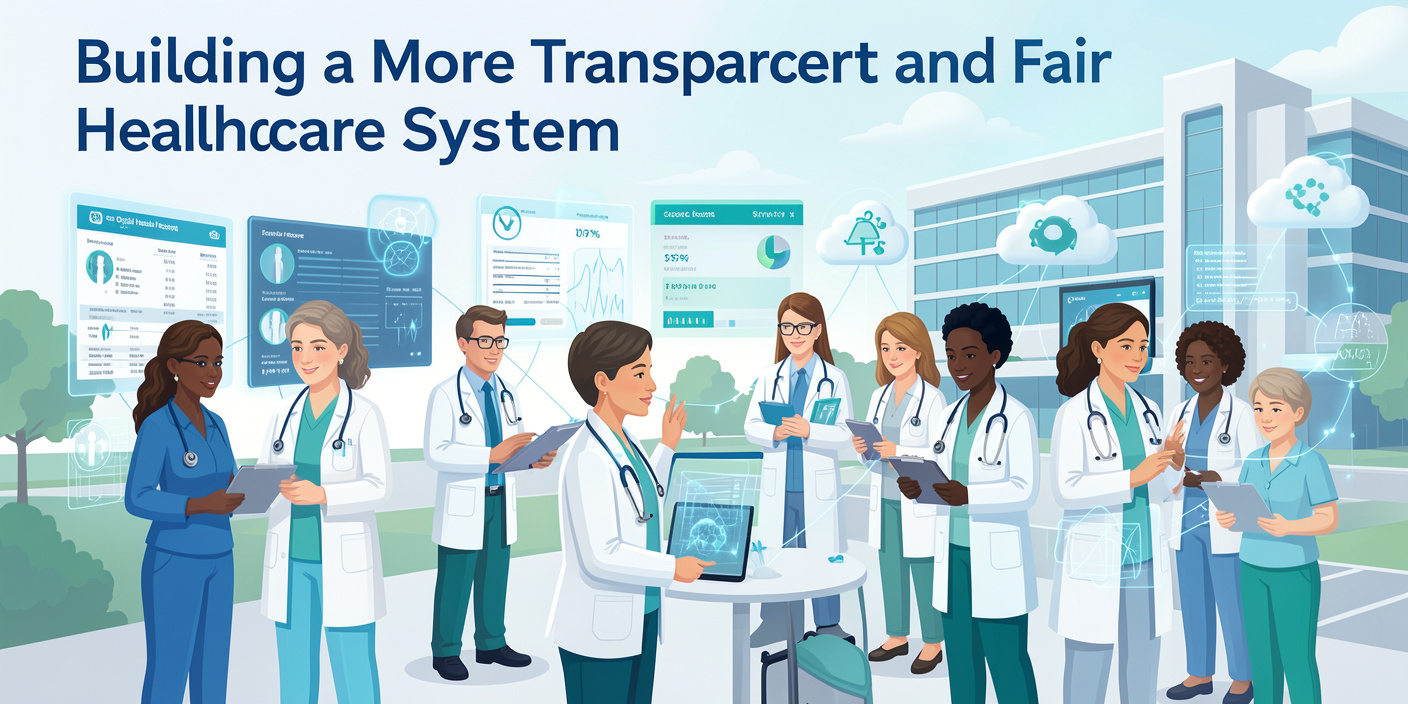
Healthcare is becoming increasingly digital, yet many patients still struggle to understand what they are paying for, why costs vary, and how healthcare decisions are made. From unclear medical bills to complicated insurance processes, a lack of transparency can create frustration and reduce trust.
Building a more transparent and fair healthcare system requires more than simply publishing prices. It requires technology, accessible information, responsible data management, and digital tools that help patients make informed decisions.
As healthcare organizations modernize their operations, technology can connect patients, providers, insurers, and administrators through more efficient digital platforms. Consequently, transparency can become part of everyday healthcare rather than an afterthought.
Technology Can Improve Healthcare Transparency
Technology is changing how healthcare organizations collect, manage, and share information. Cloud platforms, artificial intelligence, electronic health records, data analytics, and automation are helping organizations create connected healthcare environments.
For example, digital billing platforms can provide patients with clearer explanations of treatment costs. Similarly, healthcare analytics can help providers identify pricing inconsistencies, operational inefficiencies, and areas where patients may face unnecessary expenses.
Furthermore, artificial intelligence can analyze large volumes of healthcare and financial data to identify patterns that may otherwise remain hidden. This creates opportunities for organizations to improve decision making while giving patients greater visibility into their healthcare journey.
These developments are closely connected with broader Technology insights and the latest IT industry news, where data driven systems and intelligent automation continue to reshape essential services.
Making Healthcare Pricing Easier to Understand
One of the biggest challenges facing patients is understanding healthcare pricing. The same procedure may have different costs depending on the provider, location, insurance coverage, and negotiated rates.
Digital healthcare platforms can address this challenge by presenting pricing information in a simple and accessible format. Instead of forcing patients to interpret complex billing documents, technology can provide estimated costs, insurance contributions, out of pocket expenses, and payment options in one place.
As a result, patients can make better informed decisions before receiving care. Providers can also benefit because clearer pricing reduces billing confusion and improves communication.
Building a more transparent and fair healthcare system therefore depends heavily on making financial information understandable, accessible, and reliable.
The Role of Data in Fairer Healthcare
Data has become one of the most valuable resources in modern healthcare. However, its value depends on how responsibly it is collected, protected, analyzed, and shared.
Healthcare organizations can use data analytics to understand patient needs, monitor operational performance, identify cost trends, and improve resource allocation. At the same time, strong privacy and cybersecurity practices are essential to protect sensitive information.
Moreover, responsible data use can help organizations identify differences in access, treatment outcomes, and healthcare costs. These insights can support more equitable policies and encourage organizations to address gaps that affect patients.
Consequently, data driven healthcare can support both better services and greater accountability.
Digital Transformation and Patient Empowerment
Digital transformation is not only about upgrading software or moving information online. It is about redesigning healthcare experiences around the needs of patients and providers.
Patient portals, telehealth platforms, mobile applications, digital payment systems, and automated communication tools are making healthcare more convenient. In addition, these technologies can give patients greater control over appointments, records, payments, and treatment information.
For healthcare businesses, this transformation can also improve operational efficiency. Automation can reduce repetitive administrative work, while analytics can provide leaders with insights that support better resource planning.
The impact extends across the business ecosystem, connecting healthcare innovation with HR trends and insights, Finance industry updates, Sales strategies and research, and Marketing trends analysis.
Building Trust Through Responsible Innovation
Technology alone cannot create fairness. Trust must remain at the center of digital healthcare transformation.
Healthcare organizations need to communicate clearly about how patient data is used and provide understandable information about pricing, treatment options, and digital services. Likewise, technology providers must prioritize security, accessibility, reliability, and ethical design.
Transparency should also extend to artificial intelligence. When AI contributes to healthcare decisions, organizations should establish appropriate oversight and ensure that automated systems are monitored for accuracy and potential bias.
Therefore, responsible innovation is essential for building confidence among patients, healthcare professionals, and business stakeholders.
The Business Value of Fair Healthcare
A more transparent healthcare environment can create benefits beyond patient satisfaction. When organizations reduce administrative complexity and improve access to information, they can potentially lower operational costs and strengthen customer relationships.
Clear communication can also improve patient engagement. When people understand their options and costs, they are more likely to participate actively in healthcare decisions.
For healthcare businesses, this creates an opportunity to combine technology investment with stronger long term value. Better digital experiences can support efficiency, trust, loyalty, and sustainable growth.
What Businesses Can Do Next
Building a more transparent and fair healthcare system requires continuous improvement rather than a single technology initiative. Healthcare organizations should evaluate where patients experience confusion, delays, unnecessary costs, or limited access to information.
From there, businesses can identify digital solutions that address these specific challenges. Clear pricing platforms, secure data systems, AI powered analytics, digital patient services, and automated workflows can all contribute to a more connected healthcare environment.
Most importantly, technology investments should be measured by their real world impact. Faster processes matter, but so do better patient experiences, clearer information, stronger privacy, and improved accessibility.
Valuable Insights for Healthcare Leaders
Healthcare leaders should view transparency as both a responsibility and a business opportunity. Organizations that combine trustworthy data, intuitive digital platforms, responsible AI, and clear communication can create stronger relationships with patients while improving operational performance.
The future of healthcare will increasingly depend on how effectively organizations use technology to simplify complex experiences. Businesses that prioritize clarity, fairness, security, and accessibility today will be better positioned to earn trust as digital healthcare continues to evolve.
Connect with BusinessInfoPro to explore emerging technology trends and strategies that can help your organization build smarter and more trusted digital experiences.