



Successful software does not happen by accident. Behind every reliable application, business platform, and digital service is a structured process that turns an initial idea into a practical solution. The system development life cycle provides that structure by guiding teams through planning, development, testing, deployment, and ongoing improvement.
For businesses investing in digital transformation, understanding these stages is increasingly important. Technology insights show that organizations need more than innovative ideas to remain competitive. They also need disciplined development processes that reduce risks, control costs, and support long term business goals.
What Is the System Development Life Cycle
The system development life cycle is a structured approach used to plan, create, test, deploy, and maintain information systems and software applications. It helps development teams understand what needs to be built, why it matters, how it should work, and how its performance can be improved over time.
Moreover, the process creates greater visibility for business leaders, developers, designers, security teams, and other stakeholders. Instead of treating software development as a single activity, the framework divides the work into connected stages that make complex projects easier to manage.
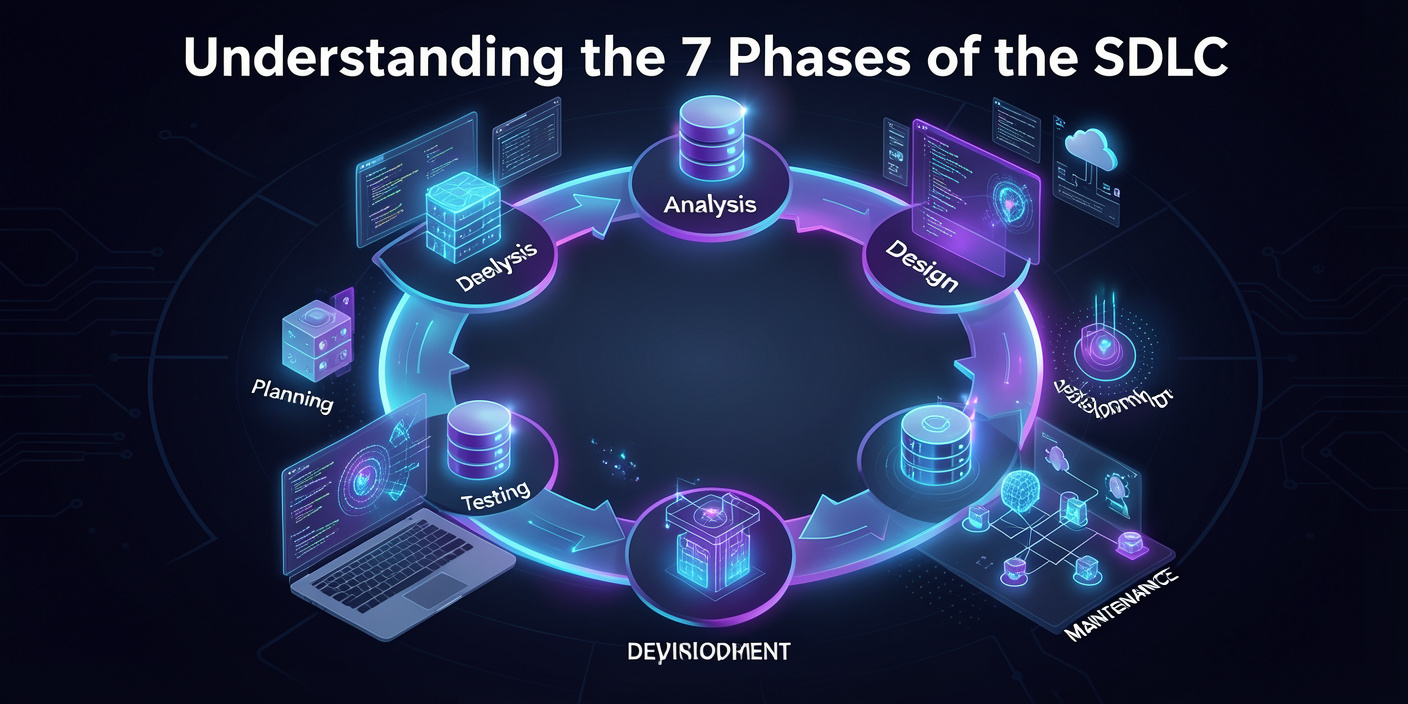
Phase One Planning and Requirement Gathering
The first stage focuses on understanding the business problem and defining what the proposed system should accomplish. Teams communicate with stakeholders, study existing processes, identify challenges, and document functional and technical requirements.
At this point, organizations should also consider budget, resources, timelines, security requirements, and potential risks. Furthermore, clear requirements prevent confusion later because developers have a stronger understanding of the expected outcome.
For this reason, careful planning creates the foundation for every stage that follows.
Phase Two System Analysis
Once requirements are collected, teams analyze the information in greater detail. They evaluate existing systems, workflows, technologies, user expectations, and operational challenges.
The objective is to determine whether the proposed solution is technically and financially practical. In addition, analysts identify gaps between the current environment and the desired future state.
This stage is particularly valuable because early analysis can reveal problems before significant development resources are committed.
Phase Three System Design
After the analysis is complete, the project moves into the design stage. Here, technical teams establish the architecture and structure of the proposed solution.
Design decisions may cover databases, application interfaces, system components, security controls, integrations, and user experiences. Meanwhile, designers focus on creating interfaces that are intuitive and aligned with user requirements.
A strong design gives developers a clear technical direction. Consequently, it can reduce unnecessary changes during implementation and improve consistency across the final product.
Phase Four Development and Implementation
Development is where the planned design becomes a functioning system. Developers write code, configure databases, connect APIs, create interfaces, and integrate the required technologies.
At the same time, development teams often work in smaller iterations so that progress can be reviewed regularly. This approach makes it easier to identify issues and adjust requirements when business needs change.
As the project progresses, collaboration becomes especially important. IT industry news continues to highlight how modern organizations depend on agile development, cloud platforms, automation, and collaborative engineering practices to deliver digital products faster.
Phase Five Testing and Quality Assurance
Testing determines whether the system performs as expected and meets the requirements established earlier. Quality assurance teams examine functionality, usability, performance, compatibility, security, and reliability.
Furthermore, testing should not be viewed as something that happens only at the end of development. Continuous testing can identify defects earlier and reduce the cost and effort required to correct them.
Security testing is also increasingly important. As cyber risks evolve, organizations must ensure that applications protect sensitive information and remain resilient against potential threats.
Phase Six Deployment
After successful testing, the system is prepared for real world use. Deployment may involve installing applications, migrating data, configuring infrastructure, training users, and establishing operational procedures.
However, deployment requires careful coordination. A technically successful application can still create business disruption if users are not prepared or if data migration is poorly managed.
Therefore, organizations should establish a deployment strategy that includes communication, user support, monitoring, and contingency planning.
Phase Seven Maintenance and Continuous Improvement
The final stage focuses on keeping the system reliable, secure, and relevant after launch. Software environments continuously change, so applications often require updates, security patches, performance improvements, and new features.
In addition, user feedback can reveal opportunities to improve workflows and usability. Regular monitoring helps organizations identify performance problems before they become serious operational issues.
This ongoing stage demonstrates that software development does not truly end when an application goes live. Instead, successful systems evolve alongside the businesses that depend on them.
Why These Phases Matter to Modern Businesses
Following a structured system development life cycle can provide businesses with better project visibility, stronger quality control, and more predictable development outcomes. More importantly, it connects technology decisions with broader business objectives.
For example, HR teams may use digital systems to improve workforce management, while finance departments can benefit from automation and accurate reporting. Similarly, sales teams can use technology to improve customer engagement and decision making.
These developments connect closely with HR trends and insights, Finance industry updates, and Sales strategies and research. At the same time, marketing teams rely on Marketing trends analysis to understand customer behavior and improve digital campaigns.
As a result, software development has become a business priority rather than simply an IT responsibility.
How Organizations Can Improve the Development Process
Organizations can make these phases more effective by involving stakeholders from the beginning and maintaining clear communication throughout the project. Requirements should be documented carefully, while project teams should regularly review progress against business objectives.
Moreover, automation can improve testing, deployment, monitoring, and repetitive development activities. Cloud technologies can also provide flexible infrastructure that supports changing business requirements.
Most importantly, teams should remain open to feedback. When developers, business users, security professionals, and decision makers work together, problems can be identified earlier and solutions can become more practical.
Actionable Insights for Better Technology Projects
A successful software project begins with a clearly defined business problem rather than technology alone. Before development starts, organizations should establish measurable objectives and identify the users who will depend on the solution.
Next, teams should treat security, scalability, usability, and maintenance as core requirements rather than afterthoughts. Regular testing and stakeholder feedback can then help keep the project aligned with expectations.
Finally, businesses should measure the system after deployment. Performance data, user feedback, operational costs, and business results can reveal whether the technology is delivering the expected value.
For businesses seeking practical Technology insights and a clearer understanding of digital transformation, structured development remains an important foundation.
Reach out to BusinessInfoPro for valuable perspectives that can help your organization make smarter technology and business decisions.