




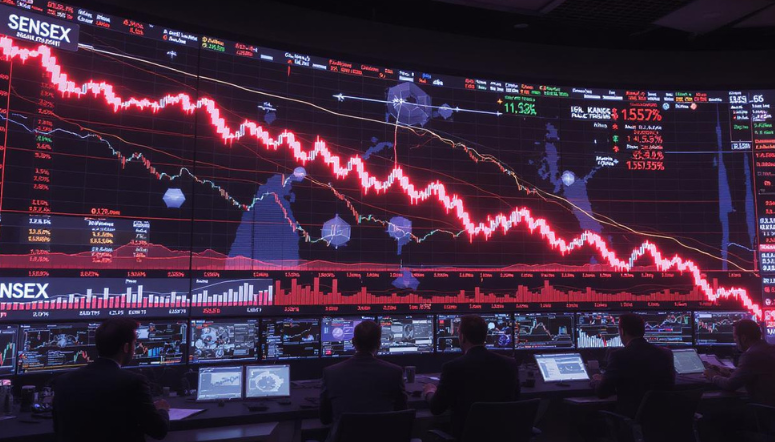
Indian equity markets witnessed a sharp decline as benchmark indices ended the session nearly one percent lower. Investors remained cautious throughout the trading day, leading to broad based selling across major sectors. The weakness was particularly visible in information technology and metal counters, which faced significant pressure amid concerns over global demand and economic uncertainty.
The market downturn reflected a combination of domestic and international factors. While investors continued to monitor inflation trends and interest rate expectations, global economic signals also influenced sentiment. As a result, traders preferred reducing exposure to riskier assets, causing the major indices to retreat from recent highs.
IT Stocks Lead the Decline
The information technology sector emerged as one of the biggest laggards during the session. Several leading technology companies witnessed notable losses as concerns surrounding global technology spending resurfaced. Slower economic growth in key overseas markets has raised questions about future revenue growth for Indian technology firms.
Moreover, investors have become increasingly selective regarding technology valuations. Even though the sector remains a long term growth driver, short term uncertainties have prompted many market participants to adopt a wait and watch approach.
The recent weakness has also attracted attention within broader IT industry news discussions, where analysts continue evaluating how global digital transformation spending may evolve in the coming quarters.
Metal Stocks Feel the Heat
Metal companies also experienced considerable selling pressure. Commodity linked businesses often react strongly to global economic expectations, and concerns regarding industrial demand weighed heavily on investor confidence.
Falling commodity prices in international markets added to the negative sentiment. Consequently, major metal producers saw declines as traders adjusted their expectations for earnings growth. Although infrastructure and manufacturing activities remain important growth drivers, immediate market concerns overshadowed longer term optimism.
Furthermore, uncertainty surrounding international trade conditions continues to influence commodity markets, creating additional volatility for metal sector stocks.
Global Factors Shape Investor Sentiment
International developments played a meaningful role in market movements. Investors closely tracked economic indicators from major economies, particularly those related to inflation, employment, and manufacturing activity.
At the same time, expectations regarding future central bank decisions remained a key market driver. Higher interest rates generally impact corporate profitability and investment activity, encouraging investors to reassess risk exposure.
Meanwhile, geopolitical developments and currency fluctuations added another layer of uncertainty. Therefore, market participants remained cautious despite signs of resilience in certain segments of the economy.
Sector Rotation Becomes More Visible
As broader markets weakened, investors appeared to rotate funds toward relatively defensive sectors. This trend highlights the changing nature of market leadership during periods of uncertainty.
While technology and metals faced challenges, some defensive industries demonstrated greater stability. Such movements are common when investors prioritize earnings visibility and lower volatility.
Interestingly, these shifts often provide valuable signals for analysts conducting marketing trends analysis and sales strategies and research, as capital flows can reflect broader business confidence and spending patterns.
What This Means for Businesses and Professionals
Market corrections frequently influence business decision making beyond the financial sector. Companies often pay closer attention to investment planning, hiring strategies, and expansion initiatives during periods of uncertainty.
For professionals following HR trends and insights, market volatility can offer clues regarding future recruitment patterns and workforce planning. Organizations may become more focused on productivity, operational efficiency, and strategic talent acquisition.
Similarly, finance industry updates remain essential for businesses seeking to understand capital market conditions and investor behavior. Staying informed helps organizations make better decisions regarding funding, growth initiatives, and risk management.
In addition, technology insights continue to play a crucial role as businesses navigate changing economic conditions. Firms that embrace innovation and digital efficiency often position themselves more effectively during market fluctuations.
Investor Outlook Remains Mixed
Despite the recent decline, market experts believe that long term fundamentals of the Indian economy remain relatively strong. Corporate earnings, infrastructure development, and domestic consumption continue to provide support for growth expectations.
However, investors are likely to remain cautious until greater clarity emerges regarding global economic conditions. Therefore, market volatility may persist in the near term as participants respond to new economic data and policy developments.
Nevertheless, experienced investors often view periods of correction as opportunities to reassess portfolios and identify quality businesses with sustainable growth potential.
Valuable Insights for Navigating Market Volatility
When markets experience sharp declines, emotional decision making can become a significant risk. Instead, investors should focus on diversification, long term objectives, and disciplined portfolio management. Monitoring finance industry updates regularly can help individuals understand broader market trends without reacting impulsively to short term fluctuations.
Likewise, staying informed through technology insights, IT industry news, HR trends and insights, sales strategies and research, and marketing trends analysis can provide a broader perspective on economic activity. Understanding how different sectors respond to changing conditions often helps investors and business leaders make more informed decisions during uncertain market environments.