
The Rise of GenAI How It Is Transforming the Future of Film and Television

The rise of GenAI is transforming the future of film and television in ways that are both exciting and fundamentally disruptive. As artificial intelligence becomes more advanced and accessible, the entire entertainment ecosystem is undergoing a shift that rivals the introduction of CGI, digital cameras and streaming platforms. What once seemed impossible is now becoming a practical reality, giving filmmakers new levels of creative freedom while challenging traditional roles and workflows across Hollywood and global production hubs.

The Evolution of Creative Tools in Modern Entertainment

The entertainment industry has always adapted to technological shifts, but the rise of GenAI represents a leap rather than a gradual step. Filmmakers can now generate storyboards, environments, concept art and even full scenes with unprecedented speed. This transformation reduces production time and cost, enabling both major studios and independent creators to push boundaries they could not reach before. The rise of GenAI is transforming the future of film and television by removing limitations that once slowed down creative experimentation.

AI Driven Storytelling and Script Development

Storytelling has always been at the heart of the entertainment industry, and GenAI is reshaping this core element. Script analysis, dialogue enhancement and narrative structuring tools are giving writers powerful resources to refine their ideas. While the creative spark still comes from human imagination, AI offers suggestions that help broaden perspectives and strengthen story flow. As the rise of GenAI continues transforming the future of film and television, script development becomes more collaborative and efficient without losing its artistic essence.

Production Reinvented Through AI Assisted Workflows

Production processes that once required weeks of planning and large teams are now being streamlined through AI technology. Generative tools help visualize lighting setups, camera placements and scene compositions long before physical sets are built. This shift supports directors and cinematographers in making more informed decisions. Even visual effects pipelines are being accelerated as AI handles rotoscoping, background replacement and environment generation. The rise of GenAI is transforming the future of film and television by enhancing speed and precision while maintaining high-quality output.

The Changing Role of Actors and Digital Performance

One of the most discussed areas is the evolving role of actors. With AI driven face replication, digital doubles and voice synthesis, performance capture is moving into a new era. Actors still bring nuance, emotion and authenticity, but AI can help extend their presence across scenes, languages or even eras. This evolution raises important creative and ethical considerations, yet it also unlocks possibilities that were unimaginable a decade ago. As the rise of GenAI continues transforming the future of film and television, the boundary between physical and digital performance becomes more flexible.

How Audiences Experience Entertainment in the AI Era

Audience expectations are shifting alongside industry changes. Viewers now engage with personalized content recommendations, interactive storytelling and AI curated entertainment pathways. GenAI enhances the way streaming platforms understand user preferences, creating viewing experiences that feel more intuitive and tailored. This evolution aligns with broader technology insights and IT industry news that show how AI is redefining customer engagement across sectors. The rise of GenAI is transforming the future of film and television not only behind the scenes but also in how stories reach and resonate with audiences.

The Influence of Industry Trends and Market Dynamics

Entertainment does not exist in isolation. HR trends and insights, finance industry updates, sales strategies and research and marketing trends analysis all play roles in shaping how studios make decisions. With GenAI becoming more central to business models, companies are reassessing budgets, talent needs and long-term strategies. AI driven production reduces financial risk, accelerates creative cycles and enables global teams to collaborate more effectively. These broader economic and strategic shifts highlight how deeply the rise of GenAI is transforming the future of film and television from both creative and commercial perspectives.

Actionable Insights for Navigating the New Entertainment Landscape

As AI driven tools continue evolving, creators and studios can benefit from embracing a proactive and informed approach. Staying updated on technology insights and IT industry news helps professionals understand emerging tools that could reshape their workflows. Encouraging collaboration between creative teams and technical experts leads to stronger project outcomes and clearer creative direction. Investing time in learning AI capabilities and limitations supports responsible and effective use of the technology. By adopting a balanced strategy, entertainment professionals can harness the rise of GenAI as it transforms the future of film and television while maintaining artistic integrity.

Explore insights crafted to support informed decisions and long term growth across the entertainment sector. Connect with businessinfopro to stay ahead as GenAI reshapes the creative world.

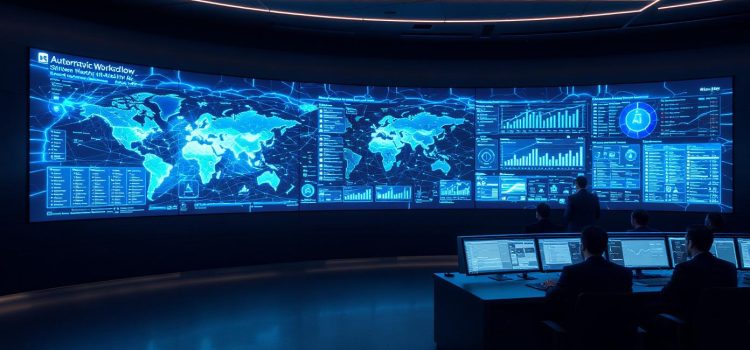
The digital transformation era has introduced technologies that push the boundaries of automation and intelligence but none are as groundbreaking as Agentic AI. In enterprise IT operations, Agentic AI represents a new phase of intelligent autonomy systems that not only execute tasks but also think, decide, and act on their own.

Unlike traditional automation or static AI models, Agentic AI operates with contextual awareness and self-governing logic. It doesn’t wait for human prompts it proactively identifies issues, proposes solutions, and executes decisions to optimize IT workflows. This next evolution of artificial intelligence is setting new benchmarks for operational efficiency, resilience, and innovation across enterprise ecosystems.

Understanding Agentic AI in the IT Landscape

At its core, Agentic AI refers to AI systems designed with “agency” the capacity to operate independently while adapting to changing environments. Instead of being bound by pre-defined rules or datasets, these systems continuously learn from their actions, environments, and outcomes.

In the context of enterprise IT operations, Agentic AI functions as a dynamic orchestrator. It connects systems, monitors data, detects anomalies, and acts decisively often in real time. The result is an intelligent IT infrastructure capable of self-healing, auto-scaling, and optimizing itself without requiring manual intervention.

Where traditional AI focuses on pattern recognition or prediction, Agentic AI adds the element of decision-making. This means IT systems can anticipate disruptions, reroute workloads, manage resources, and ensure uptime all autonomously.

From Automation to Autonomy: The Agentic AI Advantage

Over the past decade, enterprises have heavily invested in automation RPA, AIOps, and workflow orchestration. While these solutions improved efficiency, they remained reactive, dependent on pre-set triggers and limited in scope. Agentic AI transcends these limitations by introducing autonomy, reasoning, and adaptability.

1. Proactive Incident Management

Traditional IT systems rely on alerts and human operators to respond to outages. Agentic AI, however, proactively detects anomalies, diagnoses root causes, and executes resolutions autonomously. This minimizes downtime and accelerates recovery.

2. Dynamic Resource Optimization

In complex cloud or hybrid environments, balancing compute, storage, and network loads is challenging. Agentic AI dynamically allocates resources based on usage trends, performance goals, and business priorities reducing costs while maximizing efficiency.

3. Self-Healing Infrastructure

When systems face performance degradation or software failures, Agentic AI initiates automatic remediation patching, reconfiguring, or re-routing traffic without manual oversight. This capability ensures continuity and resilience.

4. Continuous Learning and Improvement

Agentic AI isn’t static. It learns continuously from system behavior, adapting to new challenges and optimizing processes. Over time, it evolves into a more precise, efficient, and reliable operator.

5. Context-Aware Decision Making

The distinguishing feature of Agentic AI is its contextual intelligence. Instead of reacting to isolated events, it considers the broader ecosystem dependencies, business rules, user impact, and predictive outcomes before executing a decision.

The Role of Agentic AI in Enterprise IT Operations

Modern enterprises operate in distributed, complex IT environments that demand speed, agility, and reliability. From network management and cybersecurity to application performance and compliance, Agentic AI is revolutionizing how IT teams work.

Intelligent Infrastructure Management

Agentic AI transforms infrastructure monitoring from reactive to predictive. It autonomously analyzes performance data, forecasts usage spikes, and scales systems accordingly. This reduces latency and improves user experiences without manual tuning.

Predictive IT Service Management

Service management is no longer about fixing what’s broken it’s about preventing issues altogether. Agentic AI uses historical and real-time data to predict incidents before they occur. By automatically creating, assigning, and resolving tickets, it reduces human workload and enhances service continuity.

AI-Driven Cybersecurity Operations

Cyber threats evolve faster than human analysts can react. Agentic AI detects anomalies across networks, analyzes attack patterns, and initiates countermeasures instantly. It also updates its knowledge base, adapting to emerging threats autonomously making enterprise systems more secure and responsive.

Automated Compliance and Governance

Regulatory compliance demands constant monitoring of data access, system configurations, and audit trails. Agentic AI simplifies this by autonomously enforcing policies, logging activities, and flagging deviations. It ensures compliance is maintained 24/7 with minimal human effort.

Enhanced Cloud Operations

As enterprises migrate workloads to multi-cloud environments, managing resources and cost optimization become complex. Agentic AI oversees deployments, automates scaling, manages redundancy, and optimizes cloud spend dynamically driving both performance and cost savings.

How Agentic AI Enhances Human Productivity

A key misconception about Agentic AI is that it replaces human roles. In reality, it augments them. By taking over repetitive, high-volume, and time-sensitive tasks, it allows IT professionals to focus on strategic innovation, architecture design, and experience improvement.

Here’s how Agentic AI amplifies human capabilities in IT:

  • Reduced Manual Intervention: Engineers no longer need to manage repetitive tasks like system checks, backups, or log reviews.
  • Faster Decision Cycles: AI agents analyze data, simulate outcomes, and recommend actions instantly, enabling smarter and faster decisions.
  • 24/7 Operational Efficiency: Agentic AI doesn’t require rest it monitors and optimizes IT environments around the clock.
  • Improved Collaboration: By generating insights, reports, and predictions automatically, Agentic AI enhances collaboration between DevOps, ITSM, and security teams.

This partnership between human intelligence and machine autonomy defines the future of IT one where technology enables humans to operate at their creative best.

The Evolution Toward Self-Governing IT Ecosystems

As enterprises embrace digital transformation, IT ecosystems are evolving toward self-governing architectures powered by Agentic AI. This evolution represents the fusion of several technologies: AI, machine learning, NLP, and autonomous systems.

In these environments, intelligent agents continuously monitor IT assets, making decisions that maintain performance, security, and compliance. They communicate with each other, coordinate actions, and optimize workflows forming an ecosystem where automation evolves into orchestration.

For example, in a self-governing IT setup:

  • A server detects an unusual spike in traffic.
  • The Agentic AI identifies it as a potential security risk.
  • It cross-references recent events, isolates the affected node, reroutes traffic, and alerts the IT team all autonomously.

Such real-time intelligence ensures agility and stability even in the most dynamic digital infrastructures.

Implementing Agentic AI in Enterprise IT

Deploying Agentic AI isn’t just a technological upgrade it’s a cultural shift. Enterprises must adopt a data-driven mindset, strong governance frameworks, and integration-ready architectures.

Key steps to implementing Agentic AI successfully include:

  1. Assess IT Maturity: Identify existing automation and analytics capabilities. Agentic AI thrives on mature data ecosystems and integrated monitoring systems.
  2. Define Strategic Objectives: Determine which IT areas incident management, cybersecurity, or cloud operations will benefit most from autonomous intelligence.
  3. Adopt Modular Integration: Introduce Agentic AI gradually, integrating it with ITSM tools, cloud platforms, and monitoring solutions.
  4. Prioritize Ethical AI Practices: Ensure transparency and accountability by setting clear human oversight and data governance guidelines.
  5. Empower Workforce with Training: Equip teams to collaborate effectively with intelligent systems and interpret AI-driven insights.

The transformation journey begins not with replacing humans but empowering them with advanced, autonomous technology.

The Future of IT Operations with Agentic AI

As enterprises scale digitally, Agentic AI will become the backbone of operational efficiency, innovation, and resilience. By combining machine autonomy with contextual intelligence, organizations can achieve truly adaptive IT environments systems that not only execute commands but also understand goals.

From cloud orchestration to cybersecurity, from predictive analytics to compliance automation, Agentic AI is redefining every layer of enterprise IT. The future is one where IT ecosystems don’t just support business operations they intelligently evolve alongside them.

As Agentic AI continues to evolve in 2025, innovation will define success. Leverage intelligent automation, adaptive systems, and AI-driven transformation with Businessinfopro. Transform how your enterprise operates, innovates, and scales in the era of autonomous intelligence.