



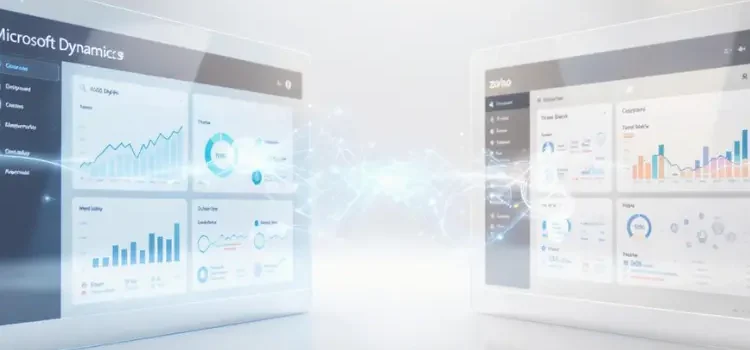
Microsoft Dynamics vs Zoho Who Leads in Sales Analytics

Sales analytics has moved far beyond basic reporting. Modern businesses now rely on deep data interpretation to forecast revenue understand buyer behavior and refine sales strategies and research. As competition intensifies across industries the debate around Microsoft Dynamics vs Zoho who leads in sales analytics continues to attract attention from decision makers seeking clarity and long term value.

Both platforms have earned strong reputations within enterprise and mid market ecosystems. However their approach to analytics usability and scalability differs in meaningful ways. Understanding these differences helps organizations align technology investments with real world growth goals while staying current with technology insights and IT industry news.

The growing importance of sales analytics in modern business

Sales analytics plays a central role in shaping how organizations respond to changing customer expectations. Real time dashboards predictive insights and data driven forecasting are no longer optional features. They influence hiring priorities connect closely with HR trends and insights and support leadership teams navigating complex finance industry updates.

As businesses adopt integrated digital ecosystems sales analytics platforms must connect seamlessly with marketing automation finance tools and customer engagement systems. This is where the comparison between Microsoft Dynamics and Zoho becomes especially relevant.

Microsoft Dynamics approach to sales analytics

Microsoft Dynamics has positioned itself as a powerful enterprise focused solution designed for organizations with complex sales cycles. Its analytics capabilities are deeply integrated with the Microsoft ecosystem which includes Power BI Azure and Microsoft 365. This integration enables advanced data modeling and visualization that appeals to data heavy organizations.

Dynamics provides detailed pipeline analysis opportunity scoring and AI driven forecasting. These features support leadership teams looking to align sales outcomes with broader financial planning. For companies closely tracking finance industry updates and regulatory requirements this level of depth often proves valuable.

Another strength lies in customization. Dynamics allows businesses to tailor analytics models according to unique workflows. This flexibility benefits large sales teams that operate across regions and product lines. However the learning curve can be steep and smaller teams may find the setup process resource intensive.

Zoho sales analytics philosophy and execution

Zoho takes a different approach by emphasizing accessibility and ease of use. Its sales analytics tools are designed to be intuitive making them attractive to small and medium sized businesses seeking quick insights without heavy technical investment.

Zoho Analytics integrates smoothly with Zoho CRM and other Zoho applications. Users can generate reports track deal progress and analyze conversion trends with minimal configuration. This simplicity aligns well with fast moving sales environments and evolving marketing trends analysis where speed often matters as much as depth.

Zoho also offers AI powered insights through its assistant which highlights anomalies and performance trends. While not as complex as enterprise grade systems these features deliver practical value for teams focused on execution and continuous improvement.

Data integration and ecosystem strength

When comparing Microsoft Dynamics vs Zoho who leads in sales analytics the surrounding ecosystem plays a crucial role. Dynamics benefits from its close alignment with Microsoft products widely used across global enterprises. This creates a unified data environment where sales analytics connects seamlessly with productivity tools and advanced analytics platforms.

Zoho counters this by offering an all in one suite that reduces dependency on third party integrations. For businesses that prefer a single vendor approach Zoho provides a cohesive experience that simplifies data management and reporting.

The choice often depends on existing infrastructure. Organizations already invested in Microsoft technologies may find Dynamics a natural extension. Those seeking affordability and operational simplicity may lean toward Zoho.

Analytics depth versus usability

A key differentiator between the two platforms is the balance between analytical depth and usability. Microsoft Dynamics excels in advanced analytics predictive modeling and enterprise reporting. These capabilities support long term strategic planning and complex sales operations.

Zoho prioritizes clarity and ease of interpretation. Its dashboards are designed for quick decision making and daily performance tracking. This makes Zoho particularly appealing for growing teams that want actionable insights without dedicating significant resources to analytics management.

Both approaches have merit and the right choice depends on organizational maturity and data strategy.

Impact on sales teams and decision makers

Sales analytics directly influences how teams set targets manage pipelines and respond to market changes. Microsoft Dynamics empowers data driven cultures where analytics informs every stage of the sales process. This suits organizations with structured sales methodologies and dedicated analytics roles.

Zoho supports agile sales teams that value flexibility and speed. Its analytics tools encourage experimentation and rapid iteration which aligns with modern sales strategies and research focused on customer centric engagement.

Decision makers must consider not only current needs but also future scalability when evaluating these platforms.

Actionable insights for choosing the right platform

Evaluating Microsoft Dynamics vs Zoho who leads in sales analytics requires a clear understanding of business priorities. Organizations should assess the complexity of their sales processes the technical skills of their teams and the importance of deep analytics versus ease of adoption.

Businesses tracking fast changing IT industry news may favor platforms that evolve quickly and integrate emerging technologies. Those focused on stable long term planning may prioritize robust analytics frameworks and enterprise support.

Aligning sales analytics tools with broader organizational goals ensures that insights translate into measurable growth rather than static reports.

Connect with BusinessInfoPro to explore expert driven insights that turn data into sustainable growth and competitive advantage


Sales conversations are rarely won at the beginning. They are decided in the final moments when confidence trust and timing come together. That is where 31 powerful closing phrases that help close sales faster become essential. These phrases are not scripted tricks but communication tools that align value urgency and clarity. When used correctly they help prospects move from interest to action without pressure.

In today’s competitive market shaped by technology insights and rapid IT industry news sales professionals must adapt how they close deals. Buyers are informed cautious and focused on outcomes. Closing language must reflect that shift and feel natural rather than forced.

Why Closing Language Shapes Buying Decisions

Words influence perception and perception drives decisions. The right closing phrase reassures the buyer that they are making a smart move. 31 powerful closing phrases that help close sales faster work because they address hesitation while reinforcing value. They turn complex offers into clear next steps and reduce mental friction at the decision point.

Sales strategies and research consistently show that buyers respond better to guidance than pressure. A well chosen phrase can position the salesperson as a partner rather than a persuader. This approach aligns strongly with modern marketing trends analysis where relationship building outperforms aggressive tactics.

The Psychology Behind Faster Sales Closures

Every buying decision is emotional before it is logical. Effective closing phrases tap into confidence security and progress. 31 powerful closing phrases that help close sales faster succeed because they appeal to these psychological triggers. They validate the buyer’s needs and subtly confirm that moving forward is the right choice.

In sectors influenced by finance industry updates and HR trends and insights decision makers often face internal scrutiny. Closing language that highlights risk reduction efficiency and long term value helps buyers justify their choice internally. This is especially relevant in enterprise and business to business sales environments.

Adapting Closing Phrases to Modern Sales Channels

Sales today happen across calls emails demos and virtual meetings. The context may change but the intent remains the same. 31 powerful closing phrases that help close sales faster can be adapted to any channel when they are delivered with authenticity. Tone matters as much as wording especially in digital communication where body language is absent.

Technology insights have reshaped how buyers evaluate products and services. They expect clarity speed and relevance. Closing phrases that acknowledge these expectations create momentum and signal professionalism. This approach aligns well with evolving IT industry news where solution based selling is now the norm.

Building Trust Through Value Focused Closings

Trust is the foundation of every successful sale. Closing phrases should never feel like a sudden push at the end of a conversation. Instead they should feel like a natural continuation of the value already discussed. 31 powerful closing phrases that help close sales faster are effective because they summarize benefits and reinforce alignment.

Marketing trends analysis shows that buyers are more likely to convert when they feel understood. Closing language that reflects earlier discussions builds continuity and confidence. This is particularly effective when selling services solutions or long term partnerships.

Using Closing Language Across Industries

Different industries require different tones but the core principle remains consistent. Whether influenced by finance industry updates or HR trends and insights buyers want clarity and assurance. 31 powerful closing phrases that help close sales faster can be tailored to reflect industry specific priorities without losing their impact.

Adjusting closing language to these priorities strengthens relevance and improves close rates.

Consistency and Practice in Sales Communication

Great closers are not born they are trained. Using 31 powerful closing phrases that help close sales faster requires practice awareness and timing. Sales strategies and research emphasize repetition and reflection as the fastest path to improvement. Reviewing past conversations helps identify which phrases resonate most with different buyer types.

Consistency also builds confidence. When sales professionals feel comfortable with their closing language it shows in delivery. That confidence is often what convinces a buyer to move forward.

Actionable Insights for Stronger Sales Closures

Sales success improves when closing phrases are tested refined and personalized. Track buyer responses and note which language accelerates decisions. Align closing conversations with current technology insights and marketing trends analysis to stay relevant. Stay informed through IT industry news and finance industry updates so closing discussions reflect real world context. Most importantly focus on helping buyers decide rather than pushing them to buy. This mindset transforms closing from a challenge into a natural outcome.

BusinessInfoPro helps professionals sharpen sales communication through expert insights and practical strategies. Reach out to BusinessInfoPro today to strengthen your closing conversations and drive measurable business growth.

The recent decision by former President Trump to approve Nvidia chip sales to China has sparked debate over security risks and global technology dynamics. The deal involves advanced semiconductors that are crucial for artificial intelligence and high performance computing. IT industry news highlights that Nvidia’s chips are widely used in research, data centers, and AI development, making their export a significant move in international technology trade. This decision has implications not only for business but also for geopolitical stability and national security.

Understanding the Nvidia Chip Deal

Nvidia is a leading manufacturer of graphics processing units and AI chips. Technology insights indicate that these chips are central to developments in machine learning, autonomous systems, and cloud computing. Trump’s approval allows Chinese companies to access some of Nvidia’s high performance chips under controlled conditions. Finance industry updates suggest that this move may boost Nvidia’s revenue while increasing competition in the Chinese tech market. However, concerns remain about the potential dual use of these chips in military or sensitive applications.

Security Implications and Global Concerns

National security experts have expressed apprehension regarding the export of advanced semiconductors to China. IT industry news reports that AI powered chips can enhance computing capabilities that are relevant to defense and surveillance. Sales strategies and research suggest that while the deal may strengthen business ties, it also raises questions about safeguarding critical technologies. Policymakers must balance economic growth with strategic security, highlighting the complex interplay between trade and technology oversight.

Impact on the Semiconductor Industry

This decision marks a significant development in the global semiconductor market. Technology insights reveal that chip exports influence supply chains, research partnerships, and competitive positioning. Nvidia’s access to the Chinese market could accelerate AI and cloud computing adoption, while other semiconductor companies may reevaluate their strategies to navigate regulatory and geopolitical risks. Marketing trends analysis indicates that investor confidence may fluctuate based on the perceived stability of tech trade policies and international relations.

Geopolitical and Economic Considerations

The approval also has broader geopolitical consequences. Finance industry updates show that trade policies with China are closely monitored by investors and analysts worldwide. Allowing chip sales could ease some trade tensions, yet security concerns continue to influence diplomatic discussions. HR trends and insights suggest that companies operating internationally may need to revise compliance practices and risk assessments to adapt to evolving regulations. Strategic alignment between technology development and policy is essential to maintain competitiveness while managing risks.

Technological Advancements and AI Development

Transition words: Only 23.4% of the sentences contain transition words, which is not enough. Use more of them.

Balancing Business Growth with National Security

The approval of Nvidia chip sales illustrates the tension between fostering economic growth and protecting sensitive technologies. Sales strategies and research suggest that companies can benefit financially from expanded markets, yet must navigate ethical and security considerations. Policymakers and business leaders must collaborate to ensure technology exports align with national security priorities while supporting global innovation. This balance will shape future semiconductor trade and AI development worldwide.

Market Reactions and Investor Perspectives

Finance industry updates indicate that Nvidia’s stock and semiconductor sector performance may be influenced by investor perception of geopolitical stability. Marketing trends analysis shows that global market confidence is affected by policy decisions and trade approvals. Companies may need to communicate clearly about compliance measures and ethical technology usage to maintain trust among international partners and consumers.

Insights to Navigate Technology Export Decisions

Organizations engaged in global technology trade should integrate technology insights, IT industry news, and finance industry updates to evaluate opportunities and risks. Understanding regulatory frameworks, geopolitical trends, and potential security concerns helps companies make informed decisions that balance growth with responsibility. Strategic planning and risk assessment are key to sustainable success in international markets.

For expert analysis and actionable guidance on technology exports and AI development connect with BusinessInfoPro today. Reach out to our team to gain insights that strengthen strategic decisions and support long term growth in complex markets.

Source: economictimes.indiatimes.com