





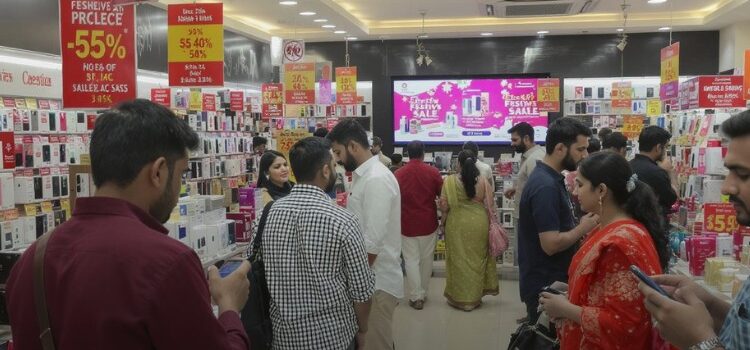
The festive season, once a golden period for India’s smartphone market, has seen a surprising slump this year. Despite aggressive promotions, cashback schemes, and early festive discounts, smartphone sales remain notably weak across both online and offline channels. Major e-commerce platforms that once reported record-breaking numbers now see cautious consumer spending, signaling a potential shift in buying behavior and market sentiment.
The Festive Season Slowdown: What’s Going Wrong?
Traditionally, India’s festive season from Navratri to Diwali has been a peak sales period for smartphones. Brands like Samsung, Xiaomi, Vivo, and OnePlus usually register double-digit growth during this time. However, this year’s data paints a different picture.
Retailers and analysts report that smartphone sales are down by nearly 15–20% compared to the previous year. Even with early launches, heavy marketing, and multiple exchange offers, consumers appear hesitant to make big-ticket purchases. Inflationary pressures, reduced disposable income, and a focus on essentials have led to tighter spending patterns.
E-commerce players started their festive sales early some even in late September hoping to stimulate demand. But early momentum fizzled quickly, with many retailers sitting on unsold inventory and reducing forecasts for the remaining quarter.
Inflation and Economic Uncertainty Hit Consumer Confidence
A key factor behind the sluggish smartphone sales is declining consumer confidence. Despite stable GDP growth, rising food prices and higher interest rates have impacted household budgets. Consumers are prioritizing necessary spending, deferring discretionary purchases like smartphones and other electronics.
Additionally, the replacement cycle for smartphones has lengthened. Earlier, consumers would upgrade every 18–24 months. Now, many users are holding onto their devices for 36 months or more, as incremental technology upgrades fail to justify higher prices.
Early Discounts Lose Their Charm
This year, online platforms rolled out early-bird sales and flash discounts weeks before the official festive season. Yet, these early discounts failed to generate the same level of excitement as in previous years.
Shoppers have become more price-sensitive and aware of marketing gimmicks. With discounts spread over a longer period, the urgency to buy has diminished. Many customers are waiting for deeper price cuts closer to Diwali or opting for budget models instead of mid-range or flagship devices.
Market experts suggest that the “discount fatigue” is real. The overuse of promotional events has reduced their impact, and frequent online deals have normalized discounted pricing. As a result, what was once a major sales trigger has lost its effectiveness.
Brand Strategy Shifts: Caution Over Aggression
In response to weaker smartphone sales, brands have adjusted their festive strategies. Instead of flooding the market with new launches, many have adopted a wait-and-watch approach.
Apple, for instance, saw modest growth driven by the iPhone 15 series, but the overall numbers fell short of expectations. Chinese brands like Xiaomi and Realme focused on budget and mid-tier devices to appeal to cost-conscious buyers. Samsung, meanwhile, emphasized exchange programs and extended warranties to enhance value perception rather than slashing prices aggressively.
Offline retailers are also facing challenges as footfall remains low in Tier-1 cities. However, smaller towns continue to show moderate growth, driven by first-time smartphone buyers seeking affordable 4G and 5G options.
The 5G Effect Fizzles Out
Last year, the rollout of 5G networks in India sparked a surge in smartphone sales, as consumers rushed to upgrade their devices. But that initial wave has now stabilized. With most mid-range smartphones already 5G-enabled, the technology is no longer a major differentiator.
Moreover, limited 5G coverage in rural areas and the lack of compelling 5G-exclusive features have dampened enthusiasm. Many users still find their existing 4G phones perfectly functional, further reducing the urgency to upgrade.
The Rise of Refurbished and Used Smartphones
Another growing trend contributing to weaker smartphone sales is the rise of the refurbished smartphone market. Platforms offering certified pre-owned devices have seen significant traction this year. Consumers are increasingly drawn to these options for their affordability and reliability.
With the gap narrowing between flagship features and mid-tier devices, buyers are choosing refurbished models of premium phones over brand-new budget smartphones. This shift is particularly noticeable among younger demographics and price-conscious urban buyers.
Retailers Grapple with Inventory Pressure
For retailers, weak smartphone sales mean mounting inventory and squeezed margins. Many stores are offering bundled deals like accessories, EMI offers, or cashback schemes to clear existing stock. However, these efforts have had limited success.
E-commerce giants are facing similar challenges. With unsold inventory from previous quarters still in warehouses, they are being forced to offer additional discounts or repackage deals to attract attention. Analysts predict that brands may scale back their Q4 forecasts, focusing instead on 2026 launches and strategic realignment.
Changing Consumer Priorities
One of the most striking takeaways this festive season is how consumer priorities are evolving. Post-pandemic, Indian consumers have shifted focus toward savings, experiences, and sustainable spending rather than impulse-driven gadget purchases.
Moreover, rising awareness of e-waste and sustainability is influencing buying patterns. Some consumers now prefer to delay upgrades until their devices are no longer functional, signaling a gradual but meaningful shift in purchase behavior.
In the premium segment, customers are seeking long-term value preferring durable, repairable devices over frequent upgrades. This change in mindset challenges the traditional growth model of the smartphone industry, which relies on rapid product cycles and frequent refreshes.
The Path Ahead for the Smartphone Industry
Although smartphone sales are currently under pressure, analysts remain cautiously optimistic about a medium-term recovery. The market is expected to stabilize as inflation eases and the economy strengthens.
In the coming quarters, innovation and affordability will be key. Brands investing in AI-enhanced features, extended software support, and sustainable materials are likely to attract the next wave of buyers. Similarly, the integration of smartphones with wearables, IoT devices, and digital ecosystems could reignite interest among tech-savvy consumers.
Until then, the festive slowdown serves as a wake-up call for the industry. Simply relying on discounts or flashy promotions will no longer guarantee success. Understanding consumer psychology, providing tangible value, and building long-term trust will define the next phase of India’s smartphone growth story.
As Smartphone Sales continue to evolve in 2025, innovation will define success. Leverage AI-powered insights, market intelligence, and data-driven strategies with Businessinfopro to stay ahead of the curve in the ever-changing technology landscape.
Source: The Economic Times