


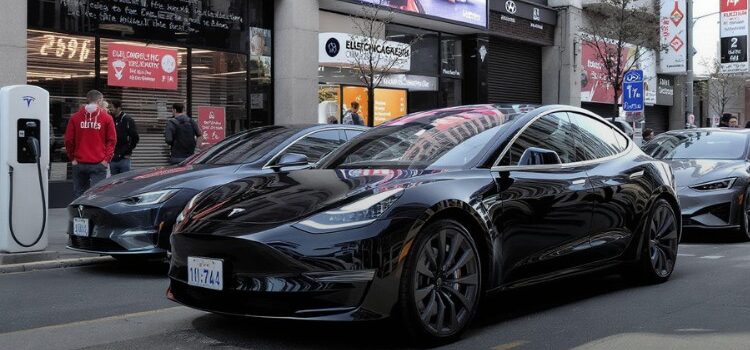
Tesla, the pioneer of electric vehicles, is facing turbulent waters in 2025 as global sales show a notable dip. While the company has long been a dominant force in the EV Market, a combination of leadership controversies, rising competition, and market pressures is reshaping its position. Investors, consumers, and industry watchers are closely monitoring how Tesla navigates this challenging period, as the broader EV ecosystem undergoes rapid transformation.
The year has already highlighted key stress points for the EV Market. Established manufacturers are expanding their electric portfolios, while new entrants are introducing competitive models with advanced technology and attractive pricing. In this evolving landscape, Tesla’s brand strength is being tested not just by market forces, but also by public perception and leadership scrutiny.
Leadership Controversies Impacting Consumer Confidence.
Elon Musk’s high-profile actions and statements have drawn global attention, influencing Tesla’s brand perception. Controversies surrounding management decisions, social media activity, and company messaging have created uncertainty among investors and consumers alike.
While Tesla has traditionally leveraged Musk’s visionary leadership as a brand differentiator, 2025 has revealed the downside of over-reliance on a single figure. Negative publicity has coincided with slower-than-expected vehicle deliveries, impacting overall sales performance. In an industry where consumer trust is crucial, leadership controversies can have measurable effects on the EV Market, influencing both loyalty and adoption rates.
Rising Competition in the EV Market
The EV Market is no longer Tesla’s playground alone. Global automakers such as Volkswagen, Hyundai, and Ford are expanding their electric vehicle lineups aggressively, targeting price points and features that appeal to a wider audience. Startups like Rivian and Lucid are also making waves with innovative designs and advanced technology, challenging Tesla’s premium positioning.
Competitive pressures have contributed to price adjustments and aggressive promotions across the EV industry. While Tesla has historically led in innovation and brand recognition, these new entrants are narrowing the gap, offering features such as longer battery ranges, improved charging infrastructure, and advanced driver-assistance systems.
This intensifying competition has forced Tesla to re-evaluate pricing strategies, marketing campaigns, and production schedules. In 2025, the EV Market is marked by rapid innovation cycles, and consumer choice is broader than ever before. Tesla’s ability to maintain market share depends on balancing its premium brand identity with accessible, consumer-friendly offerings.
Supply Chain Challenges and Production Constraints
Another factor contributing to Tesla’s sales dip is supply chain pressure. Global disruptions affecting semiconductors, battery materials, and logistics have created delays in production and vehicle deliveries. While Tesla has a strong manufacturing footprint, including Gigafactories in multiple regions, these challenges have impacted the company’s ability to meet growing demand.
Battery supply remains a critical bottleneck. As demand for EVs rises across the globe, sourcing lithium, cobalt, and nickel sustainably and efficiently has become more complex. These supply limitations not only constrain Tesla’s production but also influence the broader EV Market, affecting pricing, delivery timelines, and consumer sentiment.
Consumer Behavior and Market Sentiment
Consumer behavior in the EV Market is evolving rapidly. Buyers are now more discerning, seeking vehicles that offer not only sustainability and efficiency but also reliability, affordability, and long-term value. Tesla’s recent sales dip reflects a combination of external market conditions and shifting consumer preferences.
Price sensitivity is increasingly influencing buying decisions. While Tesla’s vehicles are known for innovation and performance, rising costs and global inflation have made some consumers reconsider timing or alternative EV options. Additionally, sustainability-conscious buyers are placing greater emphasis on supply chain ethics, battery recycling, and company transparency.
Technology and Product Strategy Adjustments
In response to declining sales, Tesla has been exploring adjustments to product strategy. Efforts include new vehicle launches, software updates, and enhancements to autonomous driving capabilities. However, 2025 demonstrates that technology alone cannot offset market pressure.
Tesla’s Autopilot and Full Self-Driving features remain a key differentiator, but regulatory scrutiny and safety concerns have created hurdles in adoption. Meanwhile, competitors are advancing rapidly with similar or enhanced autonomous capabilities, which levels the playing field in the EV Market.
Energy solutions, such as solar roofs and battery storage systems, continue to be part of Tesla’s broader ecosystem strategy. Yet, in the current environment, the company’s core vehicle sales remain the primary driver of revenue and market perception.
Regional Performance and Market Variability
Tesla’s global sales dip is not uniform across regions. North America and Europe, Tesla’s strongest markets, have experienced slower growth due to competition and economic factors. Asia-Pacific markets, particularly China, present a more complex picture.
In China, local EV manufacturers are capturing significant market share with cost-competitive models and localized production. Government incentives and policy support further favor domestic brands, creating additional pressure for Tesla to maintain its premium positioning while remaining competitive.
Emerging markets, including parts of Latin America and Southeast Asia, offer growth opportunities, but infrastructure limitations and high upfront costs for EV adoption pose ongoing challenges. Tesla’s ability to adapt region-specific strategies will play a crucial role in stabilizing sales and maintaining brand relevance in the EV Market.
Marketing, Brand Management, and Public Perception
Public perception is central to Tesla’s position in the EV Market. Marketing efforts now need to balance promoting technological leadership with rebuilding consumer trust amidst controversies. Social media influence, celebrity endorsements, and digital campaigns play critical roles in shaping public sentiment.
Brand loyalty remains a strength for Tesla, but new entrants are eroding the automatic assumption of leadership. Companies that effectively communicate reliability, safety, and value are gaining traction, making differentiation a strategic necessity.
Tesla’s challenge lies in crafting messaging that reassures customers while maintaining its image as an innovative and forward-thinking brand. Transparency in communications, responsiveness to consumer concerns, and clear demonstrations of product superiority are increasingly vital.
Broader Implications for the EV Market
Tesla’s sales performance in 2025 has ripple effects across the EV Market. As one of the most influential players, any fluctuation in Tesla’s growth trajectory influences investor sentiment, competitive positioning, and consumer expectations.
The dip also highlights the maturation of the EV industry. As market adoption increases, early-stage dominance is giving way to a more competitive landscape, where technological excellence, operational efficiency, and strategic marketing determine long-term success.
The current market pressures emphasize the importance of adaptability, supply chain resilience, and consumer-centric innovation. Companies that can navigate these factors will thrive, while those that fail to adjust risk losing relevance in the evolving EV Market.
As the EV Market continues to evolve in 2025, innovation and strategic adaptability will define success. Leverage AI insights, market intelligence, and data-driven growth strategies with Businessinfopro. Transform how your brand navigates competition, engages consumers, and drives sustainable EV market growth.
Source: ALJAZEERA