





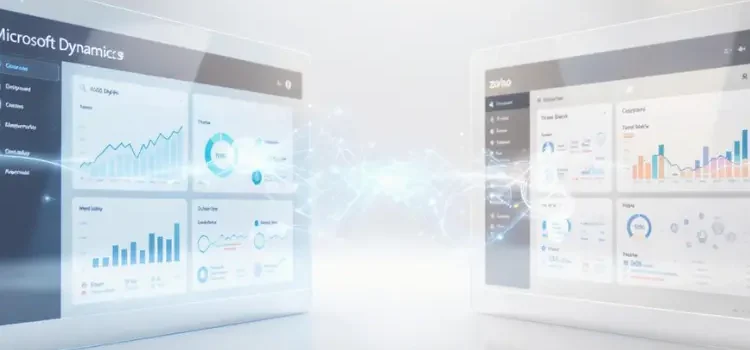
Microsoft Dynamics vs Zoho Who Leads in Sales Analytics
Sales analytics has moved far beyond basic reporting. Modern businesses now rely on deep data interpretation to forecast revenue understand buyer behavior and refine sales strategies and research. As competition intensifies across industries the debate around Microsoft Dynamics vs Zoho who leads in sales analytics continues to attract attention from decision makers seeking clarity and long term value.
Both platforms have earned strong reputations within enterprise and mid market ecosystems. However their approach to analytics usability and scalability differs in meaningful ways. Understanding these differences helps organizations align technology investments with real world growth goals while staying current with technology insights and IT industry news.
The growing importance of sales analytics in modern business
Sales analytics plays a central role in shaping how organizations respond to changing customer expectations. Real time dashboards predictive insights and data driven forecasting are no longer optional features. They influence hiring priorities connect closely with HR trends and insights and support leadership teams navigating complex finance industry updates.
As businesses adopt integrated digital ecosystems sales analytics platforms must connect seamlessly with marketing automation finance tools and customer engagement systems. This is where the comparison between Microsoft Dynamics and Zoho becomes especially relevant.
Microsoft Dynamics approach to sales analytics
Microsoft Dynamics has positioned itself as a powerful enterprise focused solution designed for organizations with complex sales cycles. Its analytics capabilities are deeply integrated with the Microsoft ecosystem which includes Power BI Azure and Microsoft 365. This integration enables advanced data modeling and visualization that appeals to data heavy organizations.
Dynamics provides detailed pipeline analysis opportunity scoring and AI driven forecasting. These features support leadership teams looking to align sales outcomes with broader financial planning. For companies closely tracking finance industry updates and regulatory requirements this level of depth often proves valuable.
Another strength lies in customization. Dynamics allows businesses to tailor analytics models according to unique workflows. This flexibility benefits large sales teams that operate across regions and product lines. However the learning curve can be steep and smaller teams may find the setup process resource intensive.
Zoho sales analytics philosophy and execution
Zoho takes a different approach by emphasizing accessibility and ease of use. Its sales analytics tools are designed to be intuitive making them attractive to small and medium sized businesses seeking quick insights without heavy technical investment.
Zoho Analytics integrates smoothly with Zoho CRM and other Zoho applications. Users can generate reports track deal progress and analyze conversion trends with minimal configuration. This simplicity aligns well with fast moving sales environments and evolving marketing trends analysis where speed often matters as much as depth.
Zoho also offers AI powered insights through its assistant which highlights anomalies and performance trends. While not as complex as enterprise grade systems these features deliver practical value for teams focused on execution and continuous improvement.
Data integration and ecosystem strength
When comparing Microsoft Dynamics vs Zoho who leads in sales analytics the surrounding ecosystem plays a crucial role. Dynamics benefits from its close alignment with Microsoft products widely used across global enterprises. This creates a unified data environment where sales analytics connects seamlessly with productivity tools and advanced analytics platforms.
Zoho counters this by offering an all in one suite that reduces dependency on third party integrations. For businesses that prefer a single vendor approach Zoho provides a cohesive experience that simplifies data management and reporting.
The choice often depends on existing infrastructure. Organizations already invested in Microsoft technologies may find Dynamics a natural extension. Those seeking affordability and operational simplicity may lean toward Zoho.
Analytics depth versus usability
A key differentiator between the two platforms is the balance between analytical depth and usability. Microsoft Dynamics excels in advanced analytics predictive modeling and enterprise reporting. These capabilities support long term strategic planning and complex sales operations.
Zoho prioritizes clarity and ease of interpretation. Its dashboards are designed for quick decision making and daily performance tracking. This makes Zoho particularly appealing for growing teams that want actionable insights without dedicating significant resources to analytics management.
Both approaches have merit and the right choice depends on organizational maturity and data strategy.
Impact on sales teams and decision makers
Sales analytics directly influences how teams set targets manage pipelines and respond to market changes. Microsoft Dynamics empowers data driven cultures where analytics informs every stage of the sales process. This suits organizations with structured sales methodologies and dedicated analytics roles.
Zoho supports agile sales teams that value flexibility and speed. Its analytics tools encourage experimentation and rapid iteration which aligns with modern sales strategies and research focused on customer centric engagement.
Decision makers must consider not only current needs but also future scalability when evaluating these platforms.
Actionable insights for choosing the right platform
Evaluating Microsoft Dynamics vs Zoho who leads in sales analytics requires a clear understanding of business priorities. Organizations should assess the complexity of their sales processes the technical skills of their teams and the importance of deep analytics versus ease of adoption.
Businesses tracking fast changing IT industry news may favor platforms that evolve quickly and integrate emerging technologies. Those focused on stable long term planning may prioritize robust analytics frameworks and enterprise support.
Aligning sales analytics tools with broader organizational goals ensures that insights translate into measurable growth rather than static reports.
Connect with BusinessInfoPro to explore expert driven insights that turn data into sustainable growth and competitive advantage